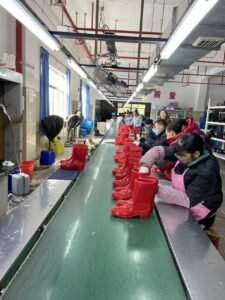

Rain Boots Manufacturer vs Supplier: A B2B Sourcing Guide
Choosing between a rain boots manufacturer and supplier is an important sourcing decision for importers, distributors, wholesalers, and footwear brands. The right choice depends on
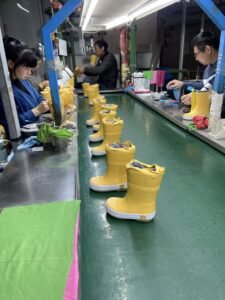
Wellington Boot Suppliers: A Sourcing Guide for Importers & Distributors
Finding the right Wellington boot suppliers involves more than comparing product catalogs and unit prices. For importers, distributors, wholesalers, and private-label brands, the right sourcing
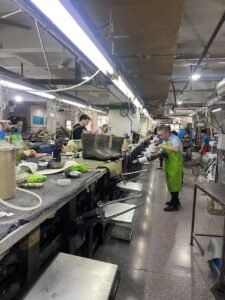
How Are Rubber Boots Made? Rubber Boot Manufacturing Process Explained
For importers, distributors, and footwear brands, understanding the rubber boots manufacturing process is about more than learning how a waterproof boot is made. The production
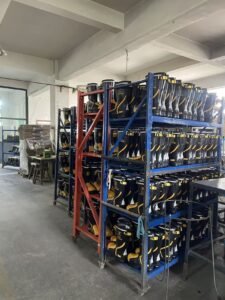
Rubber Boots Supplier vs Manufacturer: What B2B Buyers Should Know
When sourcing rubber boots for a brand, distribution business, or wholesale program, buyers may encounter manufacturers, trading companies, wholesalers, sourcing companies, and other businesses all
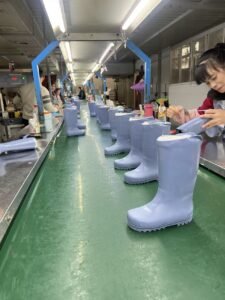
Wholesale Rubber Boots: A Sourcing Guide for Importers & Distributors
Sourcing wholesale rubber boots involves more than finding a supplier with a competitive price per pair. For importers, distributors and brands, a successful bulk order
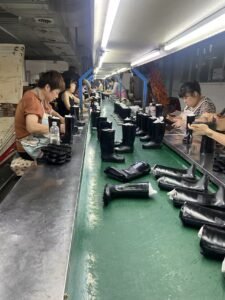
How to Choose a Rubber Boots Manufacturer for Your Brand
1. Manufacturer, Supplier or Trading Company? The terms “manufacturer” and “supplier” are often used interchangeably in international sourcing, but they do not always describe the
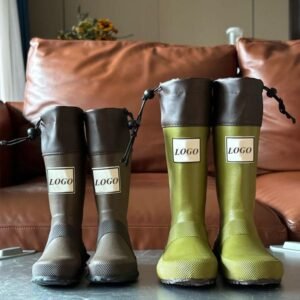
Custom Rain Boots: What B2B Buyers Can Customize for OEM Orders
Custom rain boots can range from an existing boot with private-label branding to a new product developed with proprietary colors, outsoles, molds and packaging. For
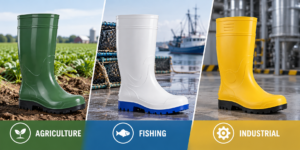
How to Choose PVC Work Boots for Agriculture, Fishing & Industrial Use
PVC work boots are used across agriculture, fishing, construction, processing and other wet working environments, but the same boot specification is not suitable for every
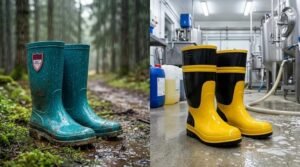
PVC vs Rubber Rain Boots: Which Material Is Better for B2B Buyers?
PVC and rubber are two commonly used material categories for waterproof boots, but they differ in material characteristics, manufacturing methods, product positioning and sourcing considerations.