PVC work boots are used across agriculture, fishing, construction, processing and other wet working environments, but the same boot specification is not suitable for every application.
A farm worker walking through deep mud may need a different outsole from someone working on a wet processing floor. Fishing and marine applications can place different demands on waterproof coverage, traction and ease of cleaning, while industrial workplaces may require additional protective features.
For B2B buyers, this means selecting PVC work boots should begin with the working environment rather than appearance alone.
This guide explains how application, outsole design, boot height, fit, protective features and other product specifications can influence the selection of PVC work boots for different professional uses.
1. Start With the Working Environment
Before comparing PVC boot styles, buyers should define where and how the footwear will actually be used.
The term “work boot” covers many different environments, and each can create different product requirements.
Identify the Main Working Conditions
Consider whether workers will regularly encounter:
Water
Deep mud
Wet floors
Uneven outdoor ground
Slippery surfaces
Long periods of standing or walking
Frequent washing or cleaning
Occupational hazards
Other application-specific conditions
These factors help determine which product features should be prioritized.
Separate Essential Features From Optional Features
Not every feature needs to be included in every work boot.
For example, a buyer may need excellent waterproof coverage and a deep tread for agricultural use but have no requirement for a protective toe.
Another workplace may require a protective toe and defined outsole performance but place less emphasis on deep-mud traction.
Defining the essential requirements first helps avoid over-specifying the product or paying for features that do not add value in the intended application.
Consider the Complete Workday
Buyers should also consider how long the boots will typically be worn and how workers move during use.
A boot worn briefly for cleaning tasks and a boot worn throughout an agricultural shift may require different priorities involving fit, weight, flexibility and comfort.
The best PVC work boot specification is therefore the one that matches the actual working conditions rather than the longest list of features.
2. PVC Farm Boots for Agriculture
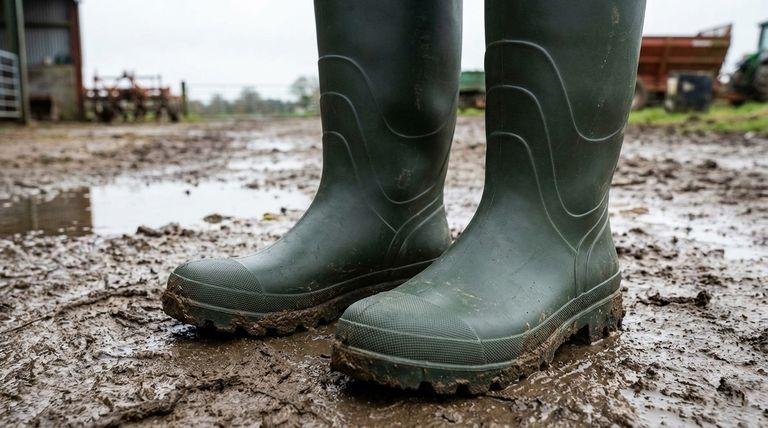
Agricultural work often involves mud, water, uneven ground and extended periods outdoors. PVC farm boots can provide waterproof protection for these environments, but buyers should evaluate more than boot height alone.
Outsole Design for Muddy Conditions
The outsole is particularly important for agricultural footwear.
A tread intended for muddy ground should provide appropriate traction while considering how soil and mud interact with the outsole pattern.
Very different tread designs may be appropriate for a muddy field and a relatively smooth indoor farm environment.
Buyers should therefore explain whether the boots will be used primarily in fields, livestock areas, greenhouses or other agricultural settings.
Boot Height and Waterproof Coverage
Taller boots can provide additional coverage in deep mud, water and wet vegetation.
However, maximum height is not automatically the best choice for every agricultural task.
Boot height should be balanced with movement, weight and the actual depth of exposure expected during work.
Ease of Cleaning
Farm footwear can require frequent cleaning.
Buyers should consider the outsole geometry, external construction and other areas where mud or debris may accumulate.
A practical agricultural boot should not only perform during use but also fit the cleaning requirements of the workplace.
Protective Features
Some agricultural environments may involve equipment, livestock or other hazards that justify additional protection.
Others primarily require waterproof footwear.
Protective toe caps or other safety features should therefore be selected according to workplace risk rather than added automatically to every farm boot.
3. PVC Fishing Boots for Marine and Wet Environments
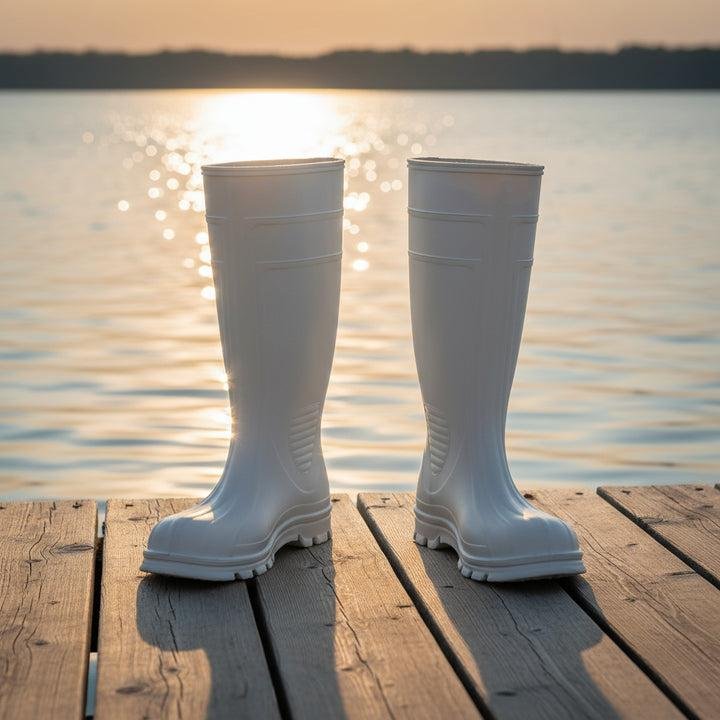
Fishing and marine work can involve frequent water exposure, wet walking surfaces and repeated cleaning.
For these applications, waterproof protection is only one part of the product specification.
Consider the Walking Surface
A fishing boot used on a wet deck may require different outsole characteristics from a boot used on muddy shorelines or in aquaculture environments.
Buyers should describe the actual surface conditions when discussing outsole options with a manufacturer.
Waterproof Coverage
Boot height should reflect the expected level of water exposure.
The appropriate construction may differ between general dock work, fishing operations, aquaculture and other marine applications.
Fit and Movement
Fishing and marine workers may spend long periods standing, walking or moving repeatedly in wet environments.
Buyers should therefore evaluate:
Physical samples are useful when these factors are important to the final application.
Cleaning Requirements
Marine, seafood and aquaculture applications can involve regular washing.
Product design should therefore consider how easily the external boot and outsole can be cleaned according to the workplace’s operating requirements.
Buyers sourcing footwear specifically for aquaculture can also read our guide to white shrimp boots for aquaculture and shrimp farming.
4. PVC Boots for Industrial Work
Industrial PVC boots can be used in workplaces where employees need waterproof footwear for wet, dirty or demanding conditions.
However, “industrial” covers a broad range of environments, so buyers should define the specific workplace before selecting the boot.
Identify Workplace Hazards
Potential considerations may include:
The required product specification should reflect the hazards actually present.
Work Boot or Safety Boot?
Not every industrial PVC boot needs to be classified or marketed as safety footwear.
If the primary requirement is waterproof protection, a general PVC work boot may be sufficient for some applications.
If the workplace requires protective toe caps or other defined safety performance, the buyer should identify these requirements before product development.
Outsole Requirements
Industrial floors can differ significantly from agricultural or outdoor surfaces.
The outsole should therefore be selected according to the actual walking environment and any applicable performance requirements rather than simply choosing the most aggressive-looking tread.
Compliance Requirements
If the finished product will make occupational safety claims, the applicable requirements for the target market should be confirmed before production.
Product testing and documentation should correspond to the finished footwear and the claims being made.
Buyers requiring additional protective features can review our guide to PVC safety boots for industrial work.
5. How Outsole Design Changes by Application
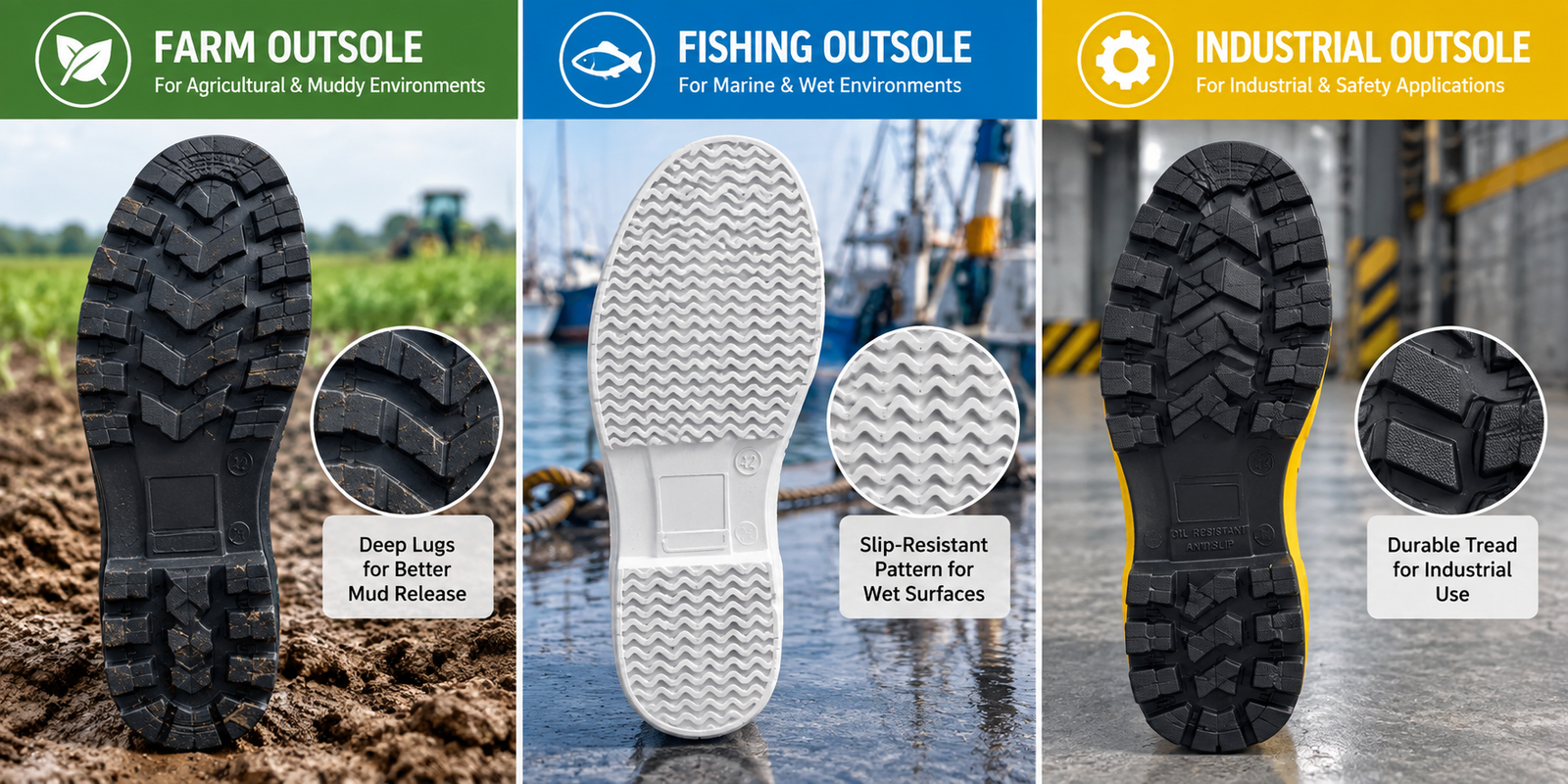
The outsole is one of the clearest examples of why PVC work boots should be selected according to application.
A single tread pattern cannot be assumed to perform equally well in every working environment.
Agriculture
Agricultural boots may need to perform on:
Mud
Soil
Grass
Uneven outdoor ground
Tread depth, pattern and the ability to manage mud buildup can therefore be important considerations.
Fishing and Marine Work
Marine footwear may be used on:
Wet decks
Docks
Processing areas
Shorelines
Aquaculture environments
The appropriate outsole depends on the actual surface and working conditions.
Industrial Environments
Industrial work can involve:
If defined slip-performance requirements apply, the outsole should be evaluated against the appropriate criteria for the finished product.
Evaluate the Finished Boot
Outsole appearance alone does not establish performance.
For B2B sourcing, buyers should evaluate the complete boot according to its intended application and any required testing rather than relying only on tread depth or visual design.
6. Boot Height, Fit and Comfort
Boot height, fit and comfort should be evaluated together with waterproof protection and outsole design.
Boot Height
Higher shafts can provide additional coverage against water and mud, but buyers should select height according to the actual working environment.
Consider:
Size Range
For B2B orders, confirm that the selected boot construction supports the required size range.
Buyers should also prepare an estimated size breakdown before bulk production.
Calf and Boot Opening
The boot opening affects fit and ease of use, particularly when workers wear trousers or other work clothing inside the boot.
If the target market has specific fit requirements, evaluate physical samples rather than relying only on nominal shoe sizes.
Comfort Depends on the Complete Product
Comfort can be influenced by:
Fit
Weight
Flexibility
Insole
Lining
Shaft construction
Outsole
Wearing duration
For products intended for long working shifts, sample evaluation is especially important.
7. Do Your PVC Work Boots Need Safety Features?
Additional safety features should be selected according to workplace hazards and applicable requirements rather than added simply because the footwear is intended for professional use.
Depending on the application, buyers may consider features such as:
When a Soft-Toe Boot May Be Appropriate
If the primary requirements are waterproof protection, traction and general work use, a soft-toe construction may be suitable for certain environments.
This can apply to some agricultural, fishing and general wet-work applications.
When Protective Toe Options Should Be Evaluated
Where impact or compression hazards are present, buyers may need to evaluate protective toe options according to the required safety specification.
The finished product should then be assessed against the applicable requirements rather than relying only on the presence of a protective component.
Avoid Over-Specifying the Product
Adding unnecessary features can affect weight, product construction, cost and sourcing requirements.
The goal is not to create the boot with the largest number of features. It is to specify the protection appropriate for the actual workplace.
composite toe vs soft toe boots for industrial work
8. OEM Options for Different Work Boot Markets
Once the appropriate boot construction has been selected, brands, importers and distributors can evaluate the OEM customization required for their market.
Depending on the existing product and project requirements, options may include:
Agriculture Programs
Agricultural distributors may prioritize practical colors, outsole designs, size ranges and durable packaging appropriate for work footwear.
Fishing and Marine Programs
Fishing and marine buyers may place greater emphasis on waterproof coverage, outsole requirements, ease of cleaning and market-specific colors or branding.
Industrial Programs
Industrial footwear projects may require additional attention to protective features, product specifications, testing and documentation.
Start With an Existing Construction
For a first order, selecting an existing boot that already matches the intended application can reduce unnecessary product development.
Buyers can then customize the elements that create commercial value for their market, such as branding, colors and packaging.
For a detailed overview of branding, colors, outsoles, molds and packaging, see our guide to custom PVC rain boots and OEM options.
9. PVC Work Boots Application Comparison
10. What to Include in a PVC Work Boot RFQ
A useful PVC work boot quotation starts with a clear description of the application.
When contacting a manufacturer, provide the following information where possible:
Intended application
Working environment
Required boot height
Outsole or traction requirements
Protective toe requirements
Size range
Estimated order quantity
Number of colors
Logo and branding
Packaging requirements
Target market
Required testing or compliance specifications
Product reference or photo, if available
If you are unsure which boot construction is suitable, provide the working conditions first and ask the manufacturer to recommend an existing product for evaluation.
This is usually more useful than selecting a boot based only on appearance.
Looking for PVC Work Boots for Your Market?
The right PVC work boot depends on where it will be used. Agriculture, fishing and industrial environments can require different outsole designs, boot heights, fit characteristics and protective features.
For B2B buyers, defining the application before selecting the product makes it easier to evaluate existing boot constructions and avoid unnecessary customization.
Jolly Boots supports OEM and bulk PVC work boot projects for brands, importers and distributors. Explore our PVC rain boots manufacturing and OEM options, or send us your application, quantity, size range and customization requirements for project evaluation.