PVC safety boots are widely used in wet, muddy and demanding work environments where workers may need waterproof footwear together with additional protective features.
However, not every PVC work boot is a safety boot, and not every industrial application requires the same level of protection.
The appropriate boot depends on the hazards and working conditions involved. A buyer sourcing footwear for a construction site may have different requirements from one purchasing boots for agriculture, food processing, utilities or general wet work.
For B2B buyers, this means product selection should begin with the intended application and required performance—not simply boot appearance or price.
This guide explains the main features to consider when sourcing PVC safety boots, including waterproof construction, toe protection, outsole design, fit, working environment, compliance requirements and OEM customization.
1. What Are PVC Safety Boots?
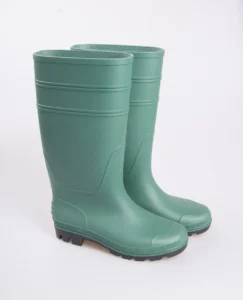
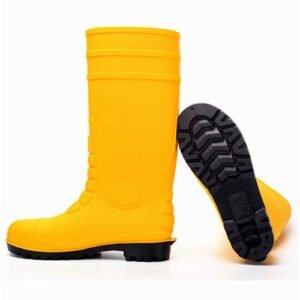
PVC safety boots are waterproof work boots made with PVC-based materials and designed with protective or performance features appropriate for specific working environments.
They combine the waterproof characteristics associated with PVC footwear with additional features that may be required for occupational use.
Depending on the product specification, these features can include:
Protective toe caps
Slip-resistant outsole designs
Reinforced construction
Application-specific tread patterns
Chemical or material performance requirements
Other occupational protection features
However, the presence of a heavy outsole or industrial-looking design does not automatically make a boot a certified safety product.
PVC Work Boots vs PVC Safety Boots
The terms “work boots” and “safety boots” are sometimes used interchangeably, but buyers should distinguish between them.
A PVC work boot may simply be designed for waterproof protection and durability in wet working environments.
A PVC safety boot normally has additional protective features or performance requirements associated with a particular workplace hazard or standard.
For example, a buyer may require waterproof boots for muddy agricultural work without needing protective toe caps. Another buyer sourcing footwear for an industrial environment may require both waterproof construction and impact protection.
The correct specification therefore depends on the actual workplace risk.
Start With the Hazard, Not the Product Name
Instead of asking only for “PVC safety boots,” buyers should identify the conditions the footwear needs to address.
These may include:
Once these conditions are defined, the appropriate boot construction and protective features can be evaluated.
2. Toe Protection: Steel Toe, Composite Toe or Soft Toe?
Toe protection is one of the first features buyers consider when sourcing safety footwear.
However, the appropriate option depends on the hazards, product requirements and target market.
Steel Toe
Steel toe caps are commonly associated with occupational footwear where impact or compression protection is required.
For PVC safety boot projects, buyers considering a steel toe construction should confirm the required performance criteria rather than assuming that the presence of a steel component alone makes the finished boot compliant with a particular standard.
Composite Toe
Composite toe caps use non-metallic materials and may be considered for applications where buyers require specific weight, material or workplace characteristics.
As with steel toe products, the finished boot should be evaluated against the required performance specification when protective claims are made.
Soft Toe
Not every industrial PVC boot requires a protective toe cap.
Soft-toe PVC work boots can be appropriate where the main requirements are waterproof protection, traction, durability or ease of movement rather than impact protection.
This can include certain agricultural, fishing, cleaning or general wet-work applications.
Choose Toe Protection Based on the Risk
B2B buyers should ask:
Is impact protection required?
Is compression protection required?
Does the workplace require a specific safety standard?
Are there restrictions on metallic components?
Is product weight an important consideration?
Will the boot be sold as safety footwear or general work footwear?
The answer determines whether steel toe, composite toe or soft toe construction is appropriate.
For a more detailed comparison of protective and non-protective toe constructions, see our guide to composite toe vs soft toe boots for industrial work.
3. Outsole Design and Slip Resistance
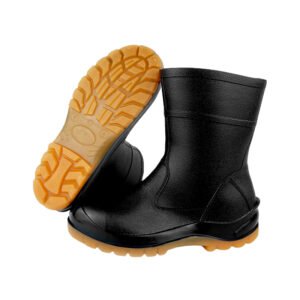
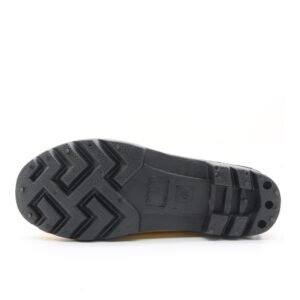
The outsole is a critical part of a PVC work or safety boot because it provides the contact surface between the worker and the ground.
Different working environments can require different tread patterns and performance characteristics.
Consider the Working Surface
Before selecting an outsole, identify where the boot will be used.
Examples include:
A tread pattern suitable for deep mud may not be the most appropriate design for a smooth indoor floor.
Tread Pattern Matters
The depth, geometry and spacing of the outsole pattern can influence how the boot interacts with water, mud and other surface conditions.
For muddy outdoor environments, buyers may prioritize a tread that can provide traction while reducing excessive material buildup.
For wet industrial surfaces, different outsole characteristics may be more relevant.
Do Not Rely on Appearance Alone
An aggressive-looking tread does not automatically prove a specific level of slip resistance.
If a product needs to meet a defined slip-resistance requirement, buyers should identify the applicable test or performance criteria for the intended market.
The outsole should then be evaluated as part of the finished boot rather than judged only by visual design.
Existing vs Custom Outsoles
For OEM projects, using an existing outsole can simplify product development.
A proprietary outsole may be considered when the buyer requires a distinctive tread, branding or specific construction, but new tooling and additional development may be necessary.
4. Waterproof Protection for Wet Work Environments
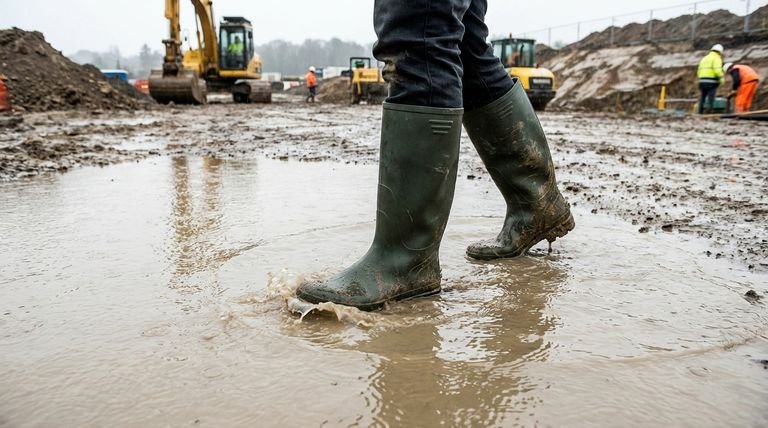
Waterproof protection is one of the main reasons PVC boots are used in industrial and outdoor work environments.
The molded construction of PVC footwear can make it suitable for conditions involving water, mud and frequent exposure to wet surfaces.
However, buyers should still consider the complete boot design rather than focusing only on the material name.
Boot Height
The required boot height depends on the working environment.
A taller boot may provide more coverage in deep mud or water, while another application may prioritize easier movement and lower weight.
The appropriate height should be selected according to how and where the boot will be worn.
Boot Opening and Fit
The shaft and opening also affect how easily workers can put on and remove the boot and how the footwear feels during use.
Buyers should consider:
Waterproofing Should Match the Application
A boot used for occasional outdoor rain protection and a boot worn throughout a wet industrial shift may face very different conditions.
Product requirements should therefore reflect the actual application, including expected exposure, working time and environment.
5. Match the PVC Boot to the Application
The best PVC boot specification depends on the environment in which the footwear will actually be used.
Rather than applying the same “safety boot” specification to every market, buyers should define the hazards and working conditions for each application.
Construction and Industrial Work
Construction sites and industrial workplaces may involve wet surfaces, mud, heavy objects and other occupational hazards.
Depending on the workplace, buyers may need to consider:
Agriculture and Farming
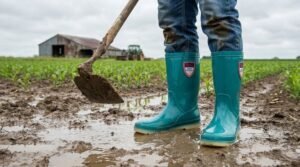
Agricultural footwear frequently needs to perform in mud, water and uneven outdoor conditions.
Important considerations may include:
Waterproof construction
Tread pattern
Ease of cleaning
Flexibility
Boot height
Long-duration wear
Protective toe caps may be required in some agricultural environments but unnecessary in others.
Fishing and Marine Work
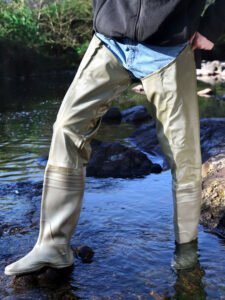
Fishing, docks and other marine environments can involve frequent water exposure and wet walking surfaces.
Buyers should consider:
Processing and Other Wet Work
PVC work boots can also be used in processing, cleaning and other environments where footwear is regularly exposed to water or wet floors.
The correct product specification depends on the substances present, floor conditions, hygiene requirements and workplace rules.
The application should always be defined before the final boot construction is selected.
6. Safety Standards and Compliance Requirements
If PVC boots are marketed or used as safety footwear, buyers should identify the applicable standards and performance requirements for the intended market before production.
Requirements can vary according to country, product category, workplace and protective claims.
Define the Product Claim
Start by confirming how the product will be described and sold.
For example, a general waterproof work boot and a safety boot with protective toe claims may fall under different requirements.
Do not add safety terminology to a product simply because it has an industrial appearance.
Identify the Target Market
Tell the manufacturer where the boots will be sold and used.
The relevant requirements for one destination may not automatically apply to another.
Confirm Required Protective Features
Depending on the intended product, buyers may need to define requirements involving areas such as:
The applicable requirements should be confirmed before the final product specification is approved.
Testing Should Match the Finished Product
Testing individual materials or components does not necessarily establish the performance of the complete finished boot.
When a specific safety claim is required, buyers should confirm which tests apply to the finished footwear and what documentation is required for the target market.
Compliance planning should therefore be part of product development rather than something addressed only after bulk production.
For a broader explanation, see our guide to rain boot safety standards for OEM manufacturing.
7. OEM Customization for PVC Safety Boots
For brands, importers and distributors, PVC safety and work boots can be developed with different levels of OEM customization depending on the selected construction and order requirements.
Customization may include:
Start With an Existing Construction
For many projects, selecting an existing boot construction is the most practical starting point.
The buyer can then evaluate which colors, branding and functional features need to be customized.
This approach can be particularly useful for trial orders or new product programs.
More Structural Changes Require Evaluation
If the project requires a proprietary outsole, different boot shape or other significant structural changes, additional tooling and development may be required.
The manufacturer should review the specification before confirming feasibility, MOQ and development requirements.
Approve the Complete Product
For safety-related products, customization should not be evaluated only from an appearance perspective.
Changes to construction or components may affect the finished product and should be considered together with the required performance specification.
Buyers planning a private-label project can also review our guide to custom PVC rain boots and OEM options.
8. What to Include in a PVC Safety Boot RFQ
A clear RFQ helps a manufacturer recommend a more appropriate PVC safety or work boot for the intended application.
Before requesting a quotation, prepare the following information where possible.
Application
Explain where and how the boots will be used.
For example:
Construction
Agriculture
Factory work
Fishing
Processing
General wet work
Required Protection
Specify whether the product requires features such as:
Target Market
State the country or region where the finished boots will be sold or used.
This is especially important when safety or compliance requirements apply.
Quantity and Size Range
Provide:
Customization
Describe any requirements involving:
Product Reference
If possible, provide a reference photo, drawing, existing boot or specification.
If you do not have a finished design, describe the application and ask the manufacturer to recommend an existing construction.
The more clearly the working environment and product requirements are defined, the easier it is to evaluate the appropriate boot before sampling and quotation.
9. PVC Safety Boots Buyer Checklist
Looking for PVC Safety Boots for an OEM Project?
Choosing PVC safety boots starts with understanding the working environment and the protection the footwear actually needs. Toe construction, outsole design, waterproof coverage, fit and compliance requirements should all reflect the intended application.
For B2B buyers, defining these requirements before sampling makes it easier to select an existing boot or determine whether additional OEM development is necessary.
Jolly Boots supports OEM and bulk PVC work and safety boot projects for brands, importers and distributors. Explore our PVC rain boots manufacturing and OEM options, or send us your application, quantity, size range, protection and customization requirements for project evaluation.