When sourcing rubber boots for a brand, distribution business, or wholesale program, buyers may encounter manufacturers, trading companies, wholesalers, sourcing companies, and other businesses all describing themselves as suppliers.
These terms do not necessarily describe the same sourcing model.
A rubber boots supplier may manufacture the footwear directly, source it from another factory, coordinate production through manufacturing partners, or supply existing products from a broader range. A manufacturer, by comparison, is directly involved in producing the footwear.
That distinction can matter when a project involves OEM development, custom tooling, detailed product specifications, quality control, or repeat bulk production. However, it does not mean that one sourcing model is automatically suitable for every buyer.
This guide explains the differences between rubber boots suppliers and manufacturers, what B2B buyers should verify, and how to evaluate which sourcing structure fits a particular purchasing program.
1. What Is a Rubber Boots Supplier?
The term rubber boots supplier describes a company that supplies rubber boots to buyers, but it does not necessarily identify who physically manufactures the footwear.
Depending on the business model, a supplier may be:
- A direct manufacturer
- A trading company
- A wholesaler
- A distributor
- A sourcing company
- A business coordinating production through one or more factories
This distinction is important because different suppliers may control different parts of the sourcing process.
One supplier may directly control production, molds, samples, and quality inspection. Another may coordinate these activities with an external manufacturing partner.
For buyers, the practical question is therefore not simply:
“Are you a supplier?”
It is:
“Who is responsible for manufacturing, product development, specifications, quality control, and bulk production?”
Understanding these responsibilities makes it easier to evaluate whether the supplier structure matches the requirements of the project.
2. What Is a Rubber Boots Manufacturer?
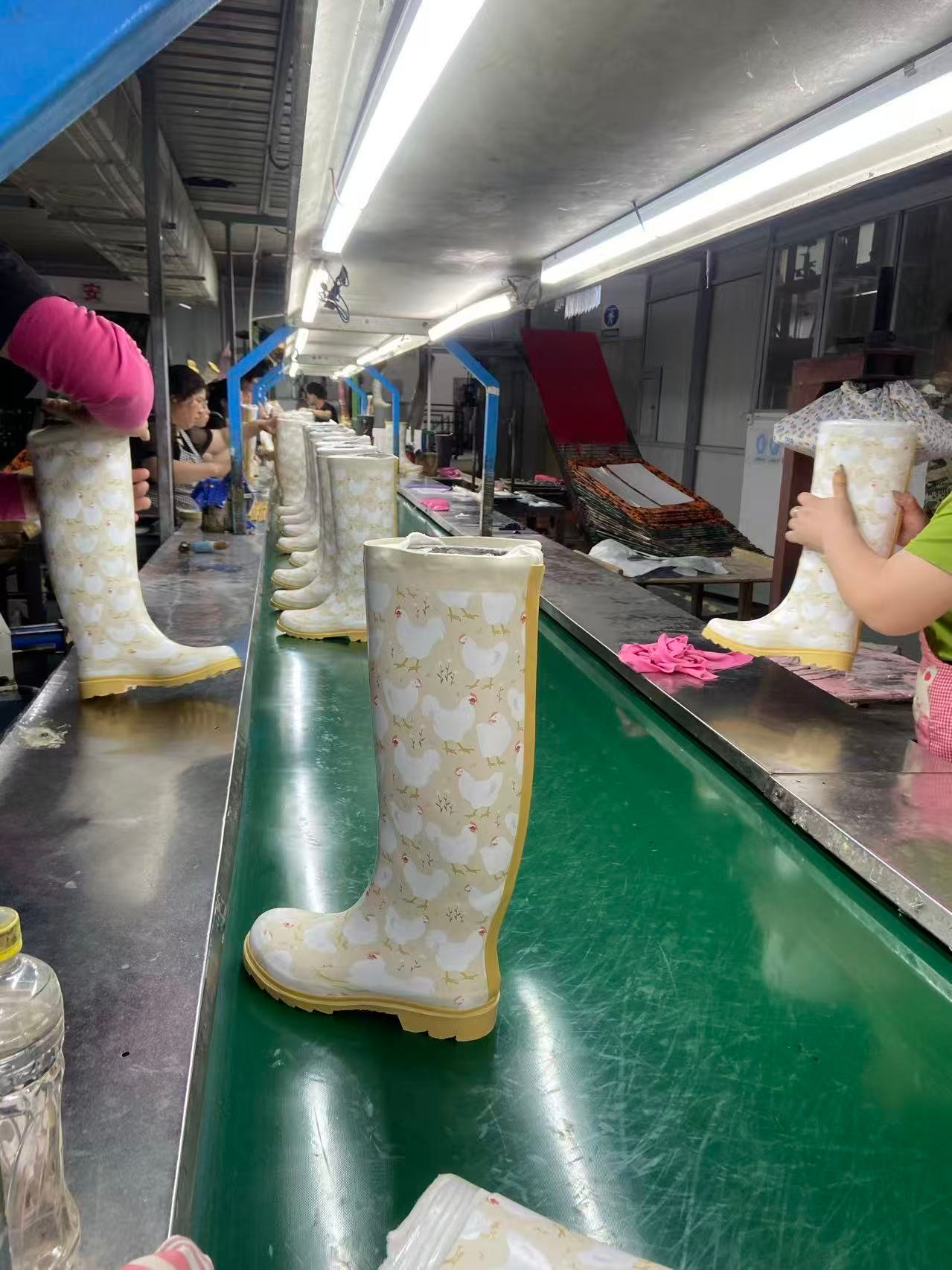
A rubber boots manufacturer is directly involved in producing the footwear.
Depending on the factory, product construction, and production setup, manufacturing responsibilities may include material preparation, component preparation, forming, assembly, finishing, inspection, and packing.
For OEM and private-label buyers, direct manufacturing capability may become particularly relevant when a project requires:
- Product-specific development
- Custom colors and branding
- Existing or new molds
- Outsole development
- Sample revisions
- Detailed product specifications
- Production-stage quality control
- Consistent repeat orders
However, buyers should still evaluate the capabilities of the individual factory. Being a manufacturer does not automatically mean that a company has the right product range, equipment, development capability, MOQ, or quality system for every project.
If direct production is important to your sourcing program, our guide on how to choose a rubber boots manufacturer explains the main factors to evaluate before selecting a factory.
3. Rubber Boots Supplier vs Manufacturer: Key Differences
The practical differences between a manufacturer and another type of supplier depend on how each business operates. Buyers should therefore compare actual responsibilities rather than relying only on company labels.
| Area | Manufacturer | Supplier / Trading Model |
|---|---|---|
| Production | Directly involved in manufacturing | May coordinate production with external factories |
| Product Range | Often related to the factory's production capabilities | May source from a broader range of products or factories |
| OEM Development | May manage development within the factory | May coordinate development with manufacturing partners |
| Molds & Tooling | May manage tooling directly | May coordinate tooling with the factory |
| MOQ | Usually related to production requirements | Depends on the supplier and sourcing structure |
| Quality Control | May control production-stage and final inspection | May rely on factory QC, supplier inspection, or third-party inspection |
| Communication | Potentially direct connection with production teams | Supplier may coordinate communication with production sources |
| Mixed Product Sourcing | May be limited to the factory's product scope | May provide access to a broader product range |
Neither column should automatically be interpreted as better.
A buyer developing a highly customized rubber boot may place greater importance on direct manufacturing control. A buyer sourcing several established footwear categories may value a supplier capable of coordinating products from different production sources.
The appropriate structure depends on the purchasing program.
4. When Direct Manufacturing Capability Matters
Direct manufacturing capability becomes increasingly relevant as a rubber boot project requires more product-specific development and production control.
This may be particularly important for projects involving:
- New product development
- Proprietary boot shapes
- New molds or tooling
- Custom outsole requirements
- Detailed construction specifications
- Multiple sample revisions
- Application-specific product requirements
- Repeat bulk production
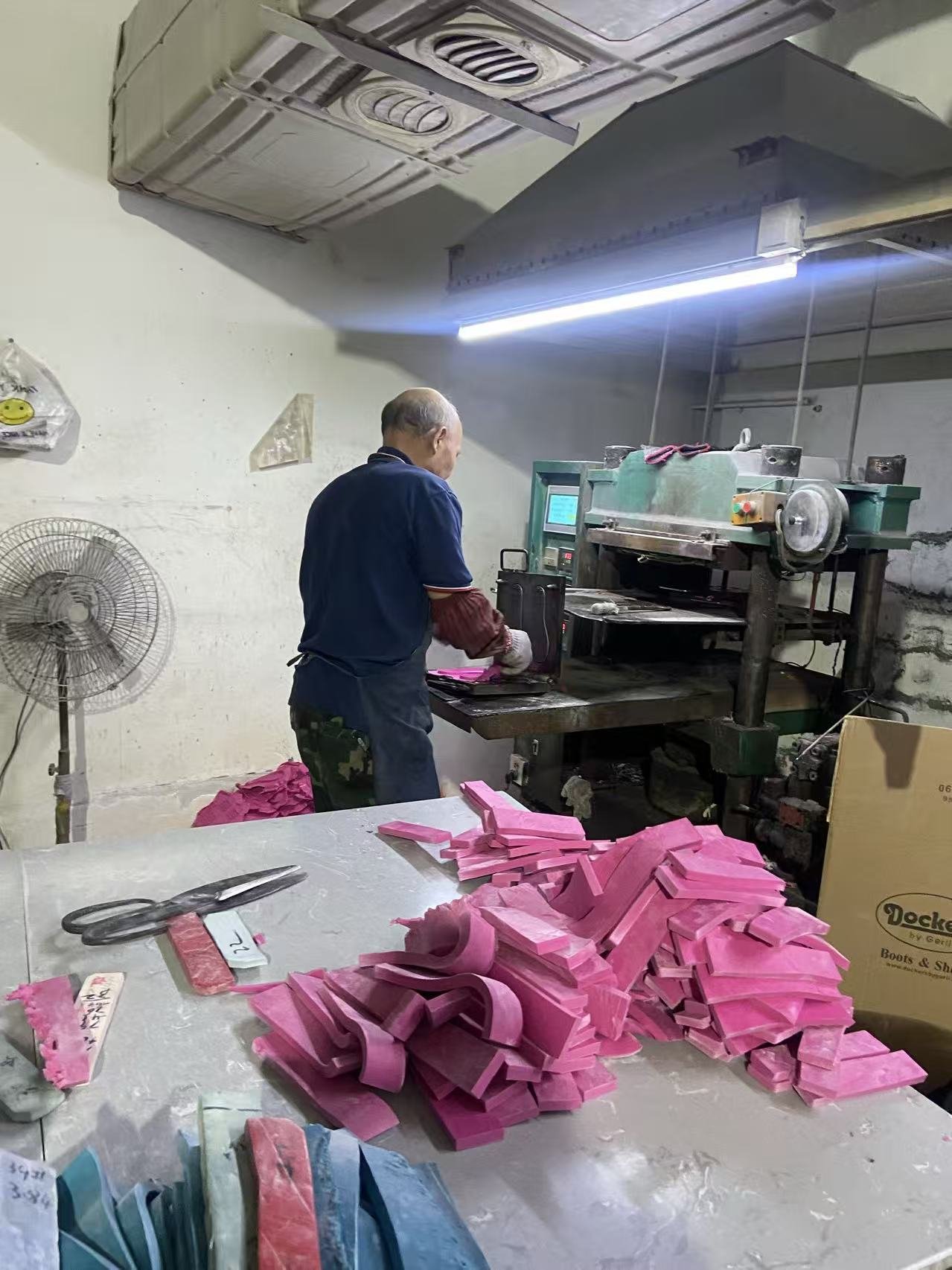
For these projects, buyers should understand who evaluates technical feasibility, who manages molds, who develops samples, and who transfers the approved specification into production.
The more product-specific control a project requires, the more important it becomes to understand who actually controls manufacturing.
This does not mean every customized project requires a completely new product. In many cases, an existing construction can provide the starting point while selected features are adapted to the buyer's requirements.
5. When a Broader Supplier Model May Be Practical
Direct factory sourcing is not the only workable model for B2B purchasing.
A broader supplier, trading, or sourcing structure may be practical when the buyer's priorities include:
- Sourcing several footwear categories
- Purchasing established products
- Limited product customization
- Consolidating products from multiple sources
- Testing new product categories
- Managing a mixed sourcing program
For example, an importer sourcing rubber boots together with several unrelated footwear categories may have different procurement priorities from a brand developing a proprietary rubber Wellington boot.
The first project may emphasize product availability and sourcing coordination. The second may require more direct involvement in tooling, specifications, sampling, and production.
Buyers should therefore avoid selecting a business model based only on whether a company calls itself a manufacturer or supplier.
Instead, define the purchasing requirements first and then evaluate which sourcing structure can execute them effectively.
6. Compare OEM and Private Label Capabilities
Many B2B buyers searching for a rubber boots supplier also need some level of customization.
However, “OEM available” can describe very different capabilities.
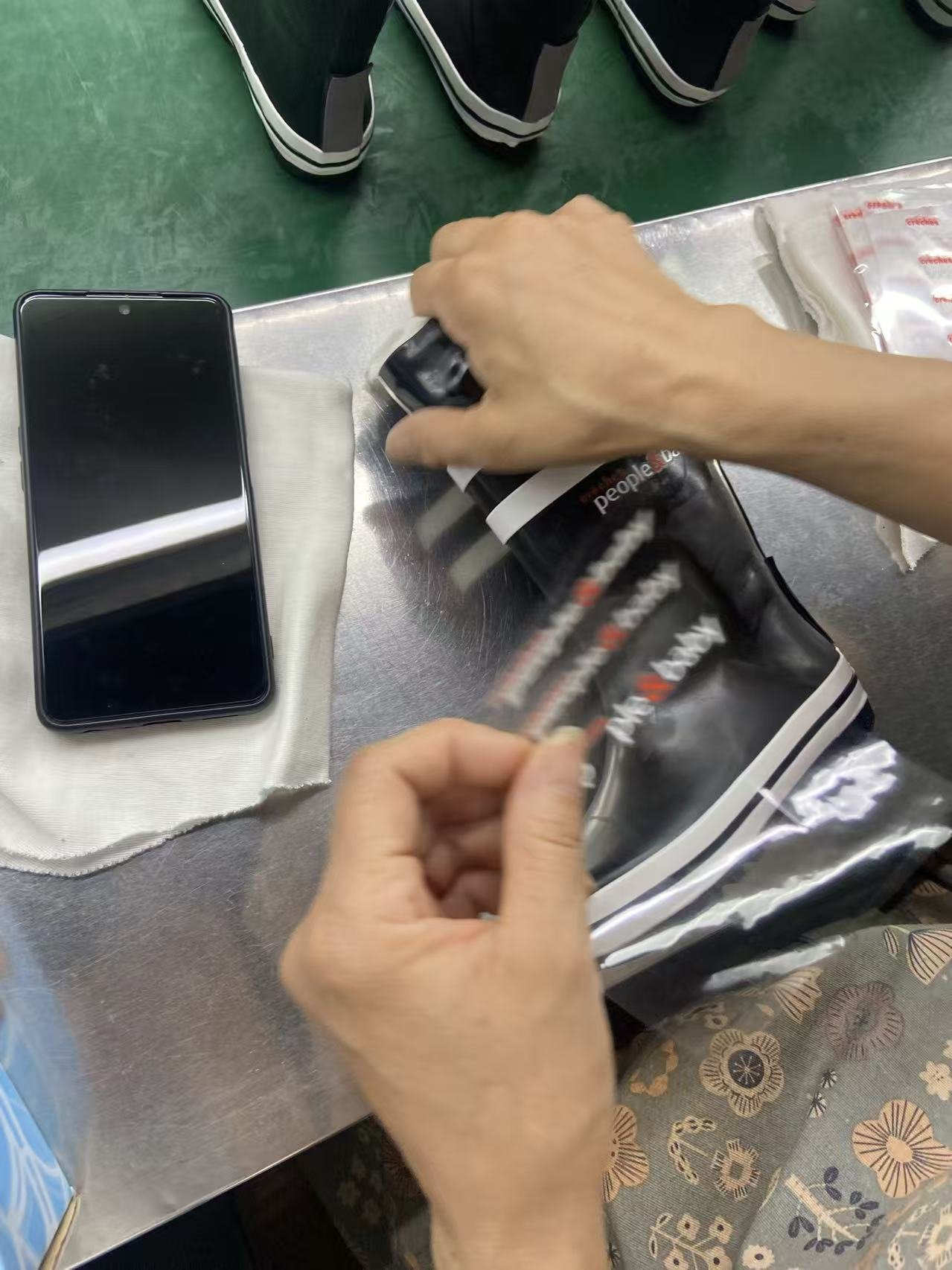
Depending on the product and manufacturing setup, customization may include:
- Custom colors
- Printed or molded branding
- Labels and hangtags
- Private-label packaging
- Available outsole options
- Product-specific components
- New molds or tooling
Instead of asking only “Do you support OEM?”, buyers should ask which parts of the specific rubber boot can be customized and who is responsible for developing and approving those changes.
For buyers developing branded or customized products, review our OEM and customization capabilities to understand the available development options.
If your project specifically involves PVC construction, you can also explore our PVC rain boots manufacturing capabilities.
7. Compare MOQ and Bulk Order Requirements
MOQ should be evaluated according to the actual product configuration rather than treated as a single number applying to every order.
When comparing rubber boots suppliers, buyers should confirm:
- MOQ per model
- MOQ per color
- Required size assortment
- Available molds and sizes
- MOQ for custom branding
- Packaging minimums
- Requirements for new tooling
- Whether different products can be combined
- Requirements for repeat orders
Different sourcing structures may also handle minimum quantities differently.
A direct factory MOQ may be driven primarily by production efficiency, materials, colors, tooling, and components. Another supplier may structure minimums around the products or factories it coordinates.
For that reason, buyers should avoid comparing MOQ figures without understanding what each minimum includes.
For a more complete bulk purchasing framework, see our guide to wholesale rubber boots sourcing for importers and distributors.
8. Who Controls Samples and Product Specifications?
One of the most important questions in an OEM sourcing relationship is what happens between sample approval and bulk production.
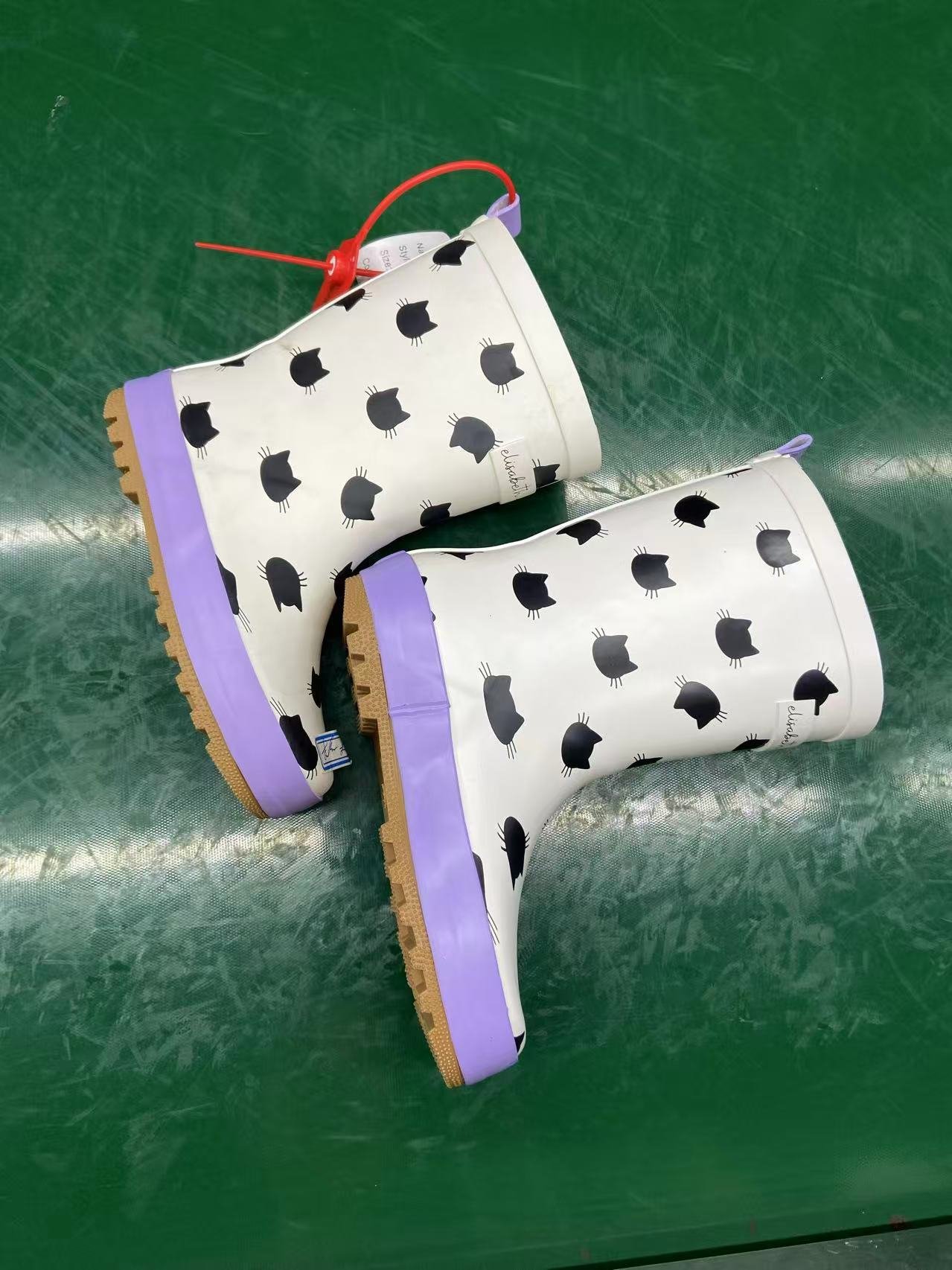
Before placing a bulk order, buyers should understand:
- Who prepares the sample?
- Who receives and records revision requests?
- Who updates the product specification?
- Who confirms the final color, logo, outsole, and packaging?
- Who communicates approved changes to production?
- What reference will be used for bulk manufacturing?
A physical sample is useful, but it should not be the only source of information.
Important product details should also be documented in a clear final specification so that both buyer and production team understand what has been approved.
If several sample revisions are made, buyers should confirm which version is final.
This becomes especially important when the supplier coordinating the project is not the same company physically manufacturing the footwear.
A clear approval process reduces the risk of information being lost as the project moves from sales communication to sampling and then into bulk production.
9. Who Controls Quality Inspection?
Quality control responsibilities should be clarified before production begins.
A manufacturer may perform inspections during production and again before packing. A supplier working with an external factory may rely on factory quality control, conduct its own inspection, arrange third-party inspection, or use a combination of these approaches.
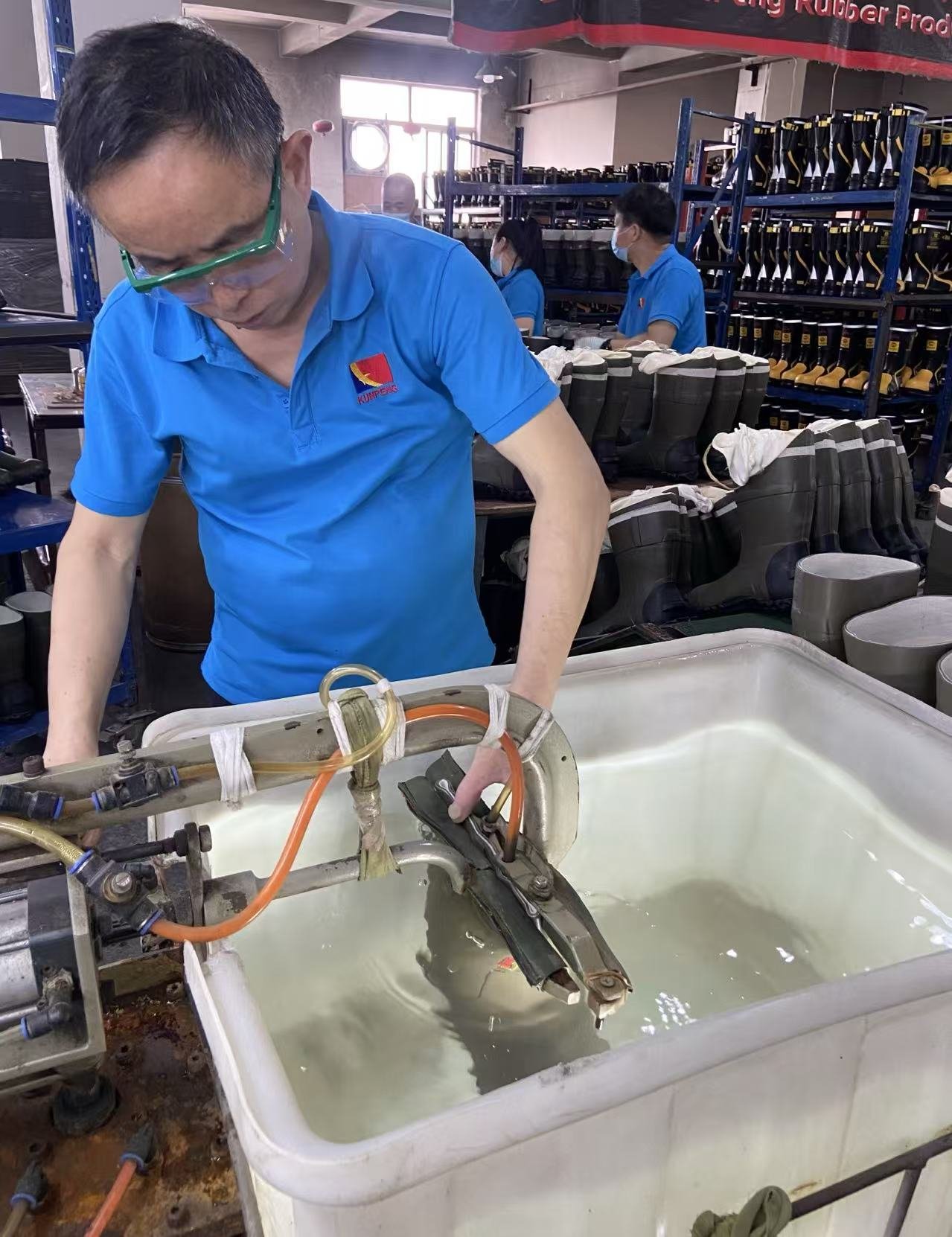
The exact model can vary, so buyers should ask:
- Who performs the inspection?
- At what stages is the product checked?
- What specification or approved sample is used as the reference?
- How are size, color, branding, and packaging checked?
- How are non-conforming products handled?
- Can additional inspection be arranged when required?
Testing requirements should also match the product's intended use, destination market, and claims.
A general waterproof boot and a product marketed with occupational or protective features may have different requirements. Buyers sourcing these products can review our guide to safety standards for OEM rain boot manufacturing.
Quality control should ultimately be evaluated by the clarity of the process and the requirements used to judge the finished product—not simply by whether the company describes itself as a manufacturer or supplier.
10. Compare Quotations on the Same Basis
A quotation from a manufacturer and a quotation from another supplier are meaningful only when they cover substantially the same product and commercial requirements.
Before comparing unit prices, confirm whether each quotation is based on the same:
- Product construction
- Material specification
- Outsole
- Lining and components
- Size range
- Colors
- Logo and branding
- Packaging
- Testing requirements
- Order quantity
- Delivery terms
For customized projects, buyers should also determine whether costs such as tooling, molds, sample development, packaging setup, testing, or inspection are included or quoted separately.
Incoterms matter as well. Prices quoted under different delivery terms should not be compared as if they represented the same commercial scope.
A lower quotation does not necessarily mean a lower price for the same product. It may represent a different construction, service scope, packaging requirement, or delivery responsibility.
The useful question is:
“What product and sourcing responsibilities are included in this quotation?”
11. Questions to Ask Any Rubber Boots Supplier
Whether you are contacting a direct manufacturer, trading company, sourcing business, or wholesale supplier, the following questions can help clarify how the project will be handled:
- Who actually manufactures the rubber boots?
- Where is production carried out?
- What types of rubber boots does the factory regularly produce?
- Who develops and revises samples?
- Who manages existing molds and new tooling?
- Which parts of the product can be customized?
- What is the MOQ for our specific configuration?
- Who records and controls the final product specification?
- Who performs quality inspection, and at what stages?
- What testing requirements apply to the intended product and market?
- Who handles private-label and export packaging?
- How are specifications controlled for repeat orders?
The answers help buyers understand not only what a supplier sells, but also how the complete sourcing program will be managed.
12. Rubber Boots Supplier Evaluation Checklist
Before selecting a supply partner, B2B buyers can use the following checklist to compare sourcing options.
| Area | What to Confirm |
|---|---|
| Business Model | Manufacturer, trading supplier, wholesaler, or other sourcing structure |
| Production | Who actually manufactures the rubber boots? |
| Product Range | Does the production source have experience with the required boot category? |
| OEM Capability | Which product elements can be customized? |
| Molds & Tooling | Who manages existing molds and new development? |
| MOQ | What minimum applies to the actual configuration? |
| Samples | Who develops, revises, and approves samples? |
| Specifications | Who controls revisions and the final production specification? |
| Quality Control | Who inspects the product and at what stages? |
| Testing | What requirements apply to the intended use and target market? |
| Packaging | Can standard, private-label, and export packaging requirements be supported? |
| Export | Who handles agreed export and shipment preparation responsibilities? |
| Repeat Orders | How are approved specifications maintained between production runs? |
The objective is not to identify one universally superior supplier type.
It is to understand who controls each part of the project and whether that sourcing structure matches the buyer's product and commercial requirements.
Choosing the Right Rubber Boots Supply Partner
A rubber boots manufacturer and a broader supplier can provide different sourcing structures, and the appropriate choice depends on the project.
Buyers developing customized products may place greater importance on direct manufacturing, tooling, sample development, specification control, and production-stage quality management.
Importers purchasing established products across several categories may have different priorities, including product range, sourcing coordination, and order consolidation.
Before choosing a supply partner, define the product category, target market, quantity, customization requirements, quality expectations, and repeat-order plan. Then identify who will be responsible for manufacturing, samples, specifications, inspection, packaging, and delivery execution.
Jolly Boots supports OEM and private-label rain boot projects for brands, importers, distributors, and wholesale buyers.
Explore our rubber boot manufacturing capabilities, review our OEM and customization capabilities, or send us your product requirements for project evaluation.
Explore Rubber Boot Options | View OEM & Custom Capabilities | Request a Factory Quote