For importers, distributors, and footwear brands, understanding the rubber boots manufacturing process is about more than learning how a waterproof boot is made.
The production process can help B2B buyers understand how product specifications are translated into finished footwear, where molds and tooling are involved, how OEM requirements affect production, and where quality control should take place.
Although the exact process varies according to the boot construction, materials, outsole design, equipment, and product requirements, rubber boot manufacturing generally moves through several important stages: product specification, material and component preparation, tooling, forming, assembly, vulcanization, finishing, inspection, and packing.
This guide explains how rubber boots are made and highlights what B2B buyers should pay attention to when evaluating a factory for OEM, private-label, or bulk production.
1. How Are Rubber Boots Made?
Rubber boot production begins before materials reach the production line. The manufacturer first needs a clear understanding of what product is being made and what specifications must be achieved.
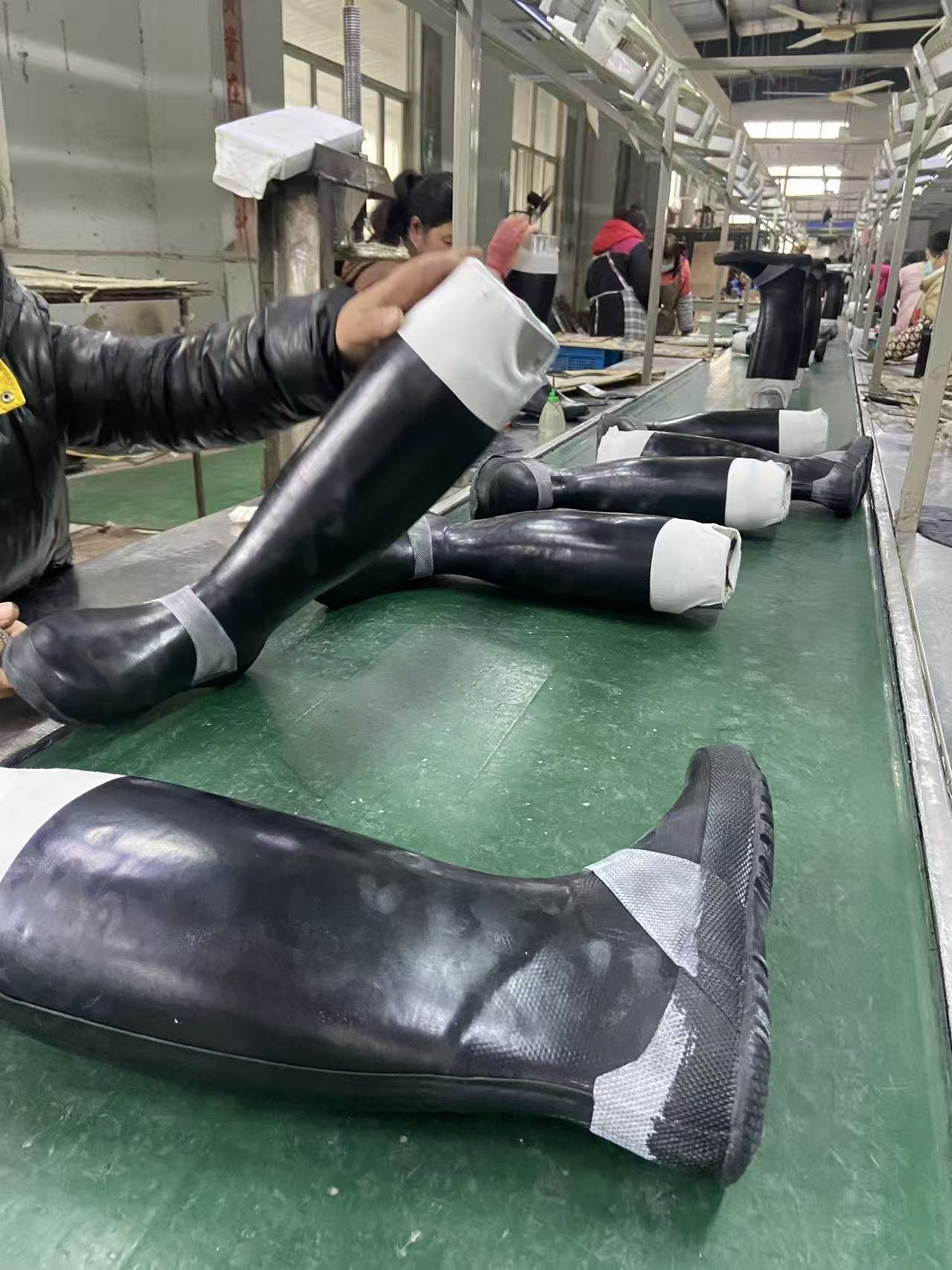
A typical production program can be understood through the following stages:
- Product requirements and specifications — define the boot type, sizes, colors, construction, branding, packaging, and intended application.
- Materials and components — prepare the rubber materials and other components required for the product.
- Molds and tooling — confirm whether existing tooling can be used or whether new development is required.
- Component forming — prepare and form the parts required for the boot construction.
- Boot assembly — combine the relevant components into the required boot structure.
- Vulcanization and curing — process the assembled rubber boot under controlled manufacturing conditions.
- Trimming and finishing — remove excess material and complete required finishing operations.
- Quality control — check the product against the approved requirements.
- Final inspection and packing — confirm the finished order and prepare it for shipment.
The exact sequence and individual operations can differ between products. A standard rubber Wellington boot, for example, may not follow exactly the same production requirements as a more specialized work boot or a highly customized OEM design.
For B2B buyers, the important point is not to assume that every rubber boot follows one universal manufacturing formula. Instead, buyers should understand how the factory controls the process for the specific product being ordered.
2. Start With Product Requirements and Specifications
Before bulk production begins, the manufacturer needs a defined product specification.
This is especially important for OEM and private-label projects because even visually similar rubber boots may have different construction, components, branding, or packaging requirements.
Depending on the project, the specification may define:
- Boot type and intended application
- Product construction
- Size range
- Boot height
- Color requirements
- Outsole requirements
- Lining or internal components
- Logo and branding
- Labels and packaging
- Applicable testing requirements
For customized projects, sample approval can also become an important bridge between product development and bulk production.
The approved product and documented requirements provide a reference for manufacturing and quality inspection.
In other words, manufacturing does not simply begin with raw materials. It begins with defining what the finished product is expected to be.
Brands and importers developing their own products can review our OEM and custom rain boot development capabilities when planning product specifications and customization requirements.
3. Prepare Rubber Materials and Boot Components
Rubber boots are built from materials and components selected according to the required product construction.
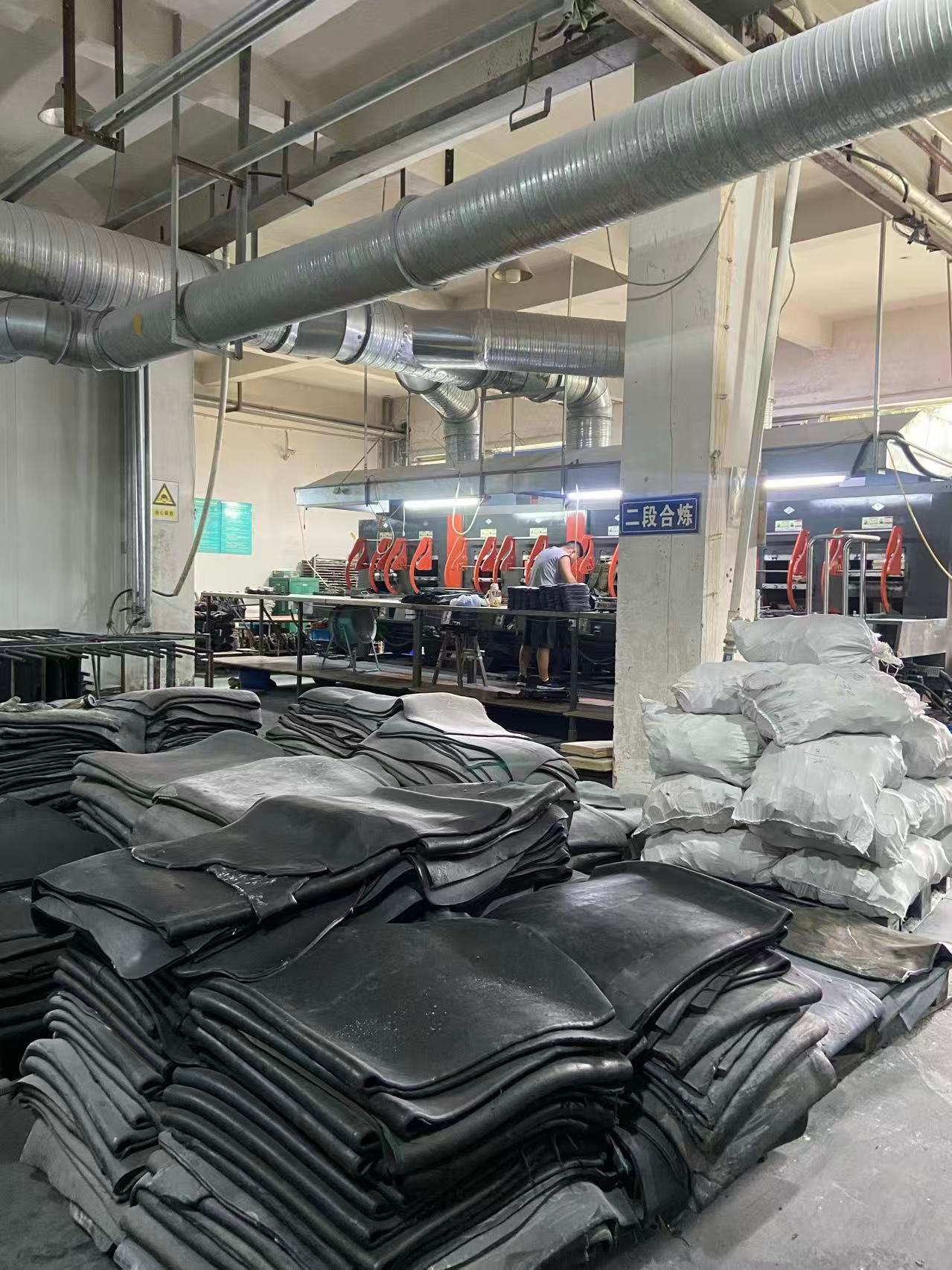
Depending on the boot design, production may involve:
- Rubber materials
- Upper components
- Outsole components
- Lining materials
- Reinforcement or structural components
- Branding elements
- Other product-specific components
The selected materials must match the intended construction and product requirements.
For B2B buyers, this is one reason why quotations should be based on a defined product rather than only a photograph or general description. Two rubber boots that look similar externally may not necessarily use the same materials, components, or construction.
Material and component choices can also influence later manufacturing stages, including forming, assembly, vulcanization, finishing, and quality control.
4. Prepare Rubber Boot Molds and Tooling
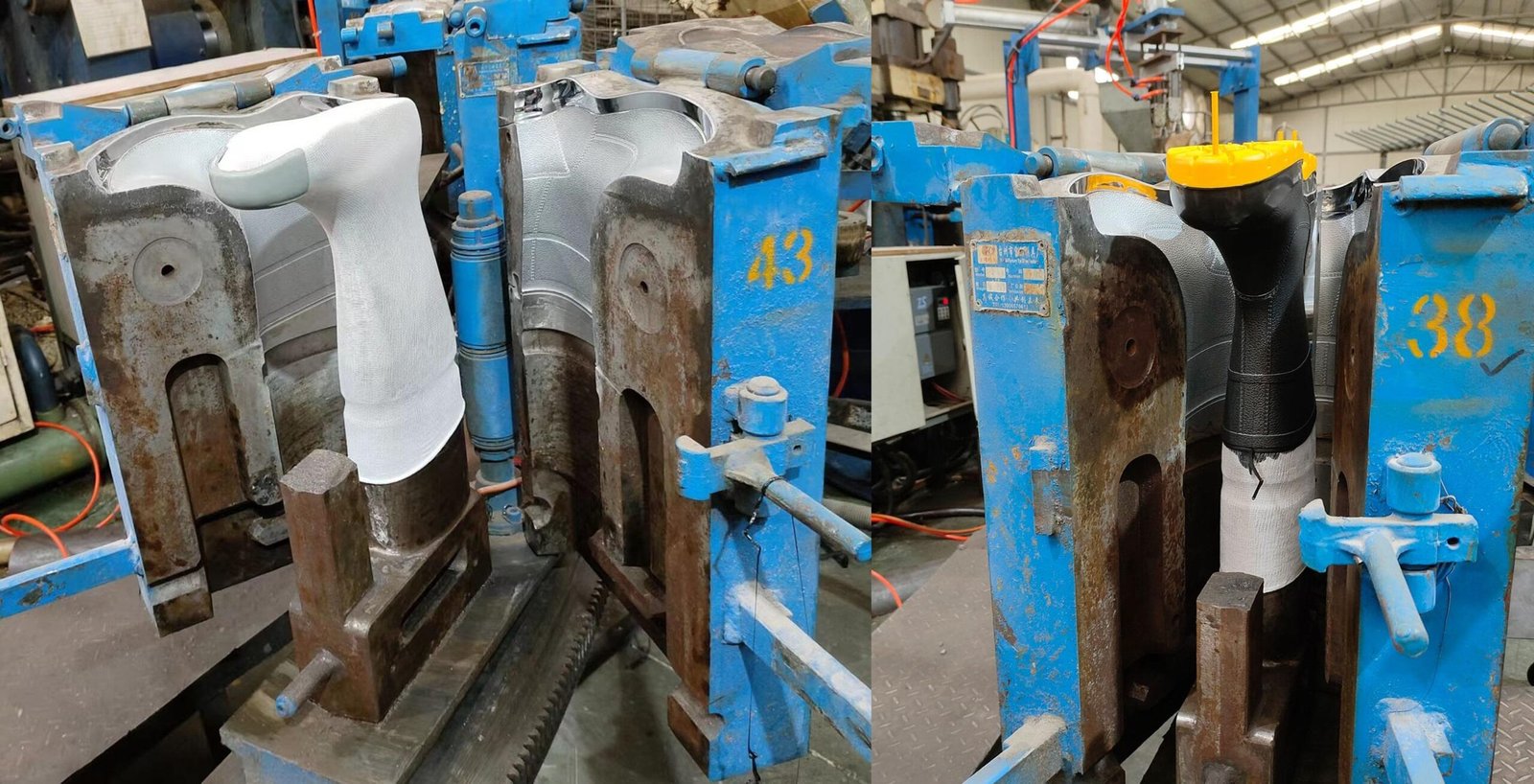
Molds and tooling play an important role in rubber boot production, particularly when different sizes, outsoles, shapes, or customized product features are involved.
Existing Tooling
For an established rubber boot design, existing molds or tooling may already support the required product and size range.
This can be practical for buyers who want to develop a product based on an existing construction while customizing selected elements such as color, branding, or packaging.
New Tooling
A more differentiated OEM project may require new tooling when the buyer needs a new product shape, outsole design, dimensions, or other construction-specific features.
Before beginning such a project, buyers should confirm:
- Which molds already exist?
- Which sizes are available?
- Does the requested outsole already have suitable tooling?
- Which product changes would require new tooling?
- How will new tooling be evaluated and approved?
Not every private-label order requires a new mold. Buyers should first determine whether an existing construction can meet the commercial and product requirements before adding unnecessary tooling development.
5. Form the Rubber Boot Components
Once the materials, product specification, and tooling are prepared, the required rubber boot components can move into the forming and preparation stages.
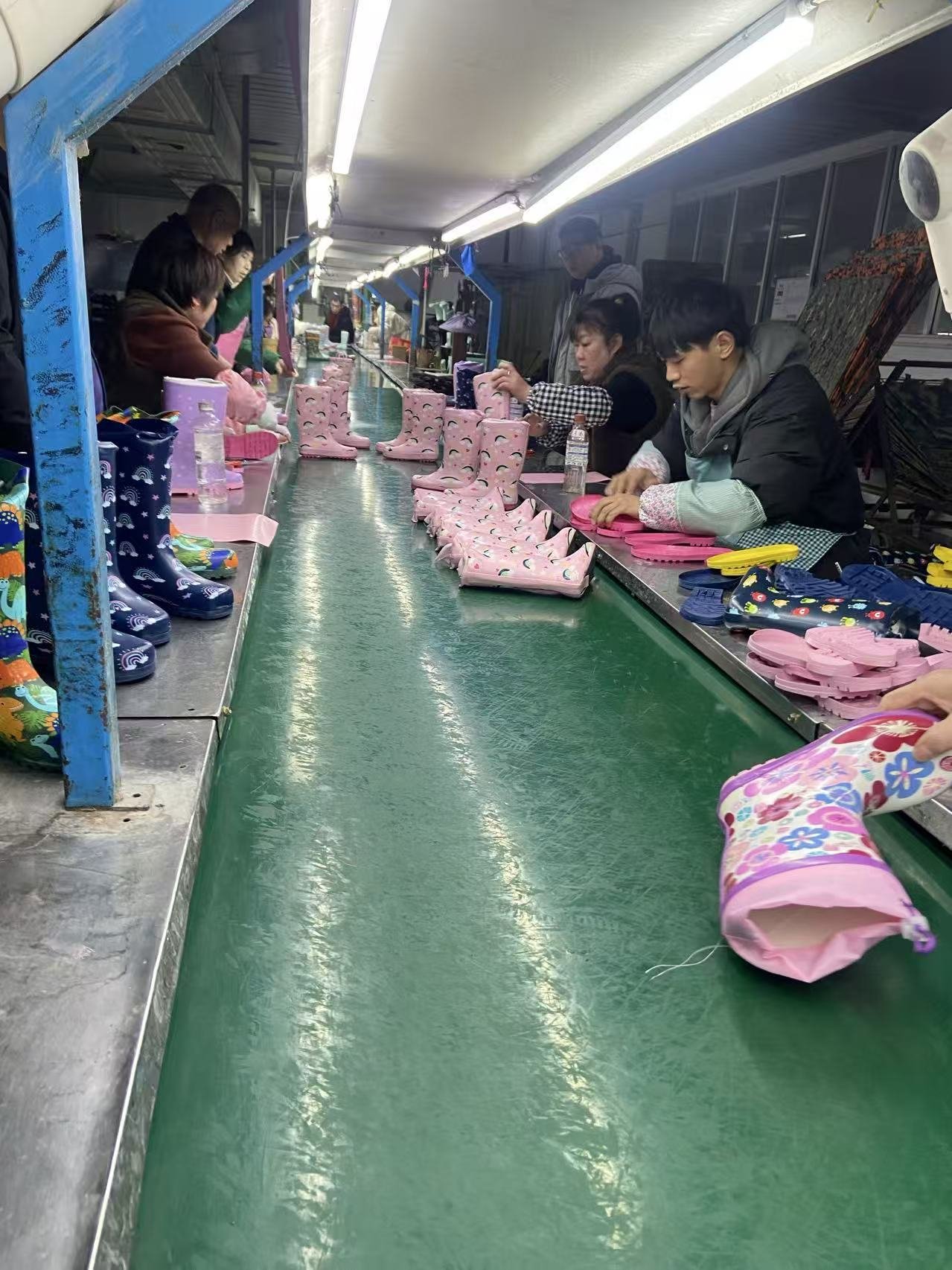
At this stage, rubber materials are prepared and formed into the components needed for the specified boot construction.
The exact operations depend on the product design and factory process. Different parts of the boot may require different preparation before they can be assembled into the finished structure.
For OEM buyers, consistency during component preparation matters because variations at an early production stage can affect later assembly, appearance, fit, and finishing.
This is also why buyers evaluating a factory should look beyond the finished product display. Understanding how components are prepared and controlled provides a clearer view of the actual manufacturing process behind the product.
6. Assemble the Rubber Boot
After the required components have been prepared, they are assembled according to the boot construction and approved product specification.
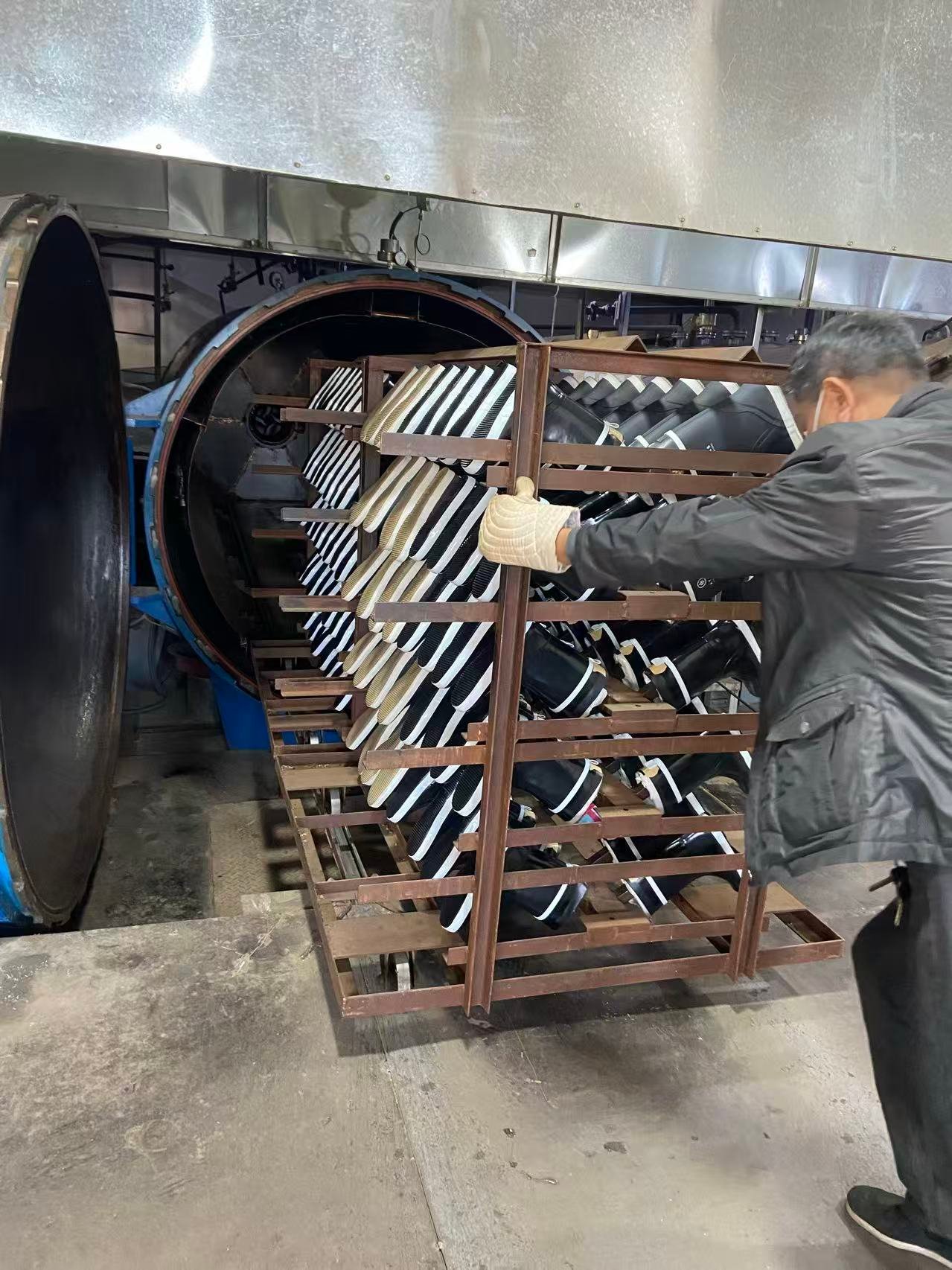
Depending on the product, this stage can involve combining different upper, outsole, lining, reinforcement, and other construction elements before subsequent processing.
Assembly requires attention to consistency because the position and condition of individual components can influence the finished boot.
Important production considerations may include:
- Correct components for the specified model
- Correct size
- Component positioning
- Construction consistency
- Alignment
- Preparation for subsequent processing
For customized rubber boots, this is also where a clearly approved specification becomes important. Production teams need to know exactly which construction and components apply to the order rather than relying on general product descriptions.
7. Curing and Vulcanization
Vulcanization is an important stage in the rubber boot manufacturing process.
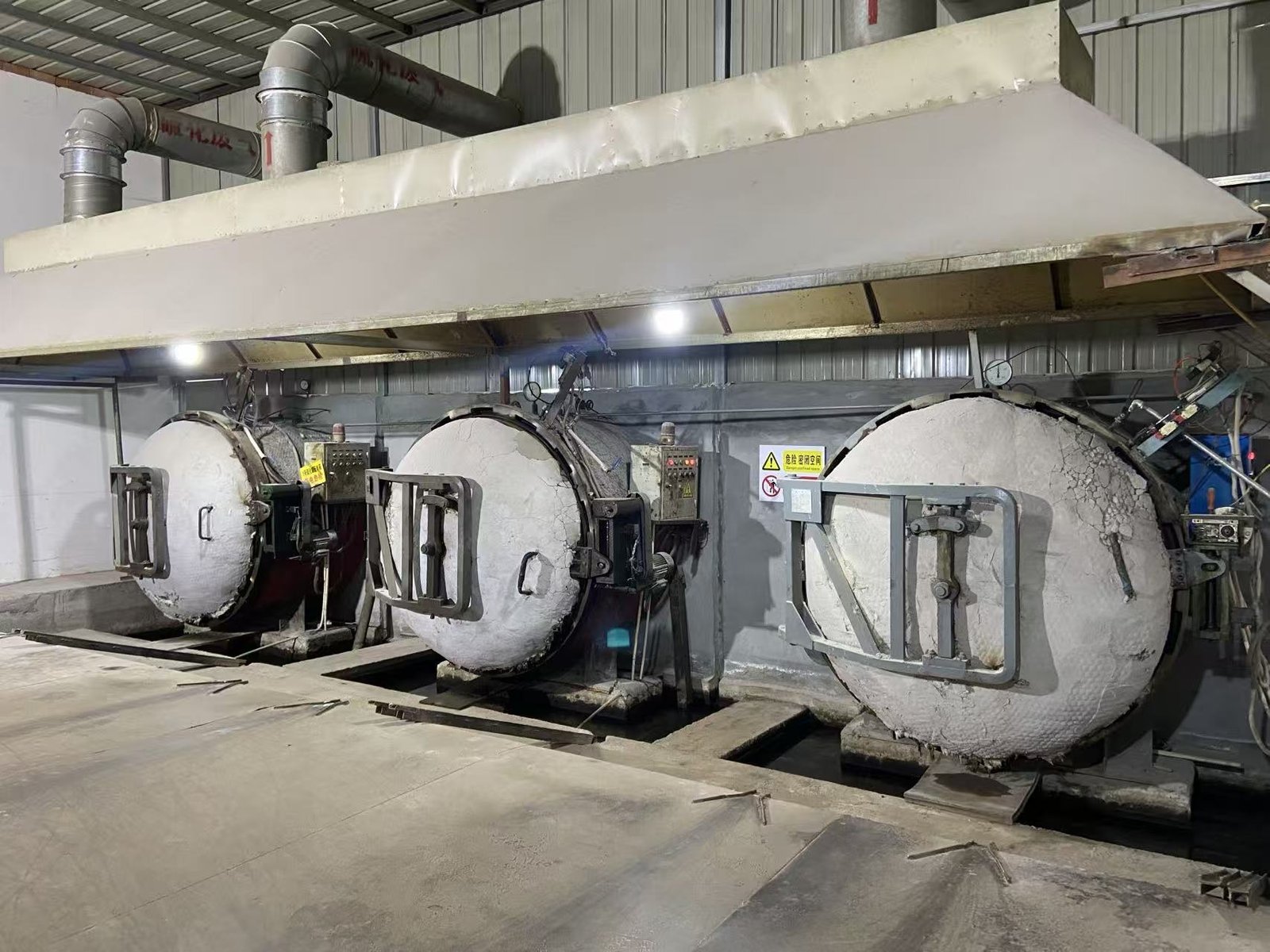
After the rubber boot has been assembled to the required stage, it undergoes controlled curing and vulcanization as part of the production process.
This stage transforms the assembled rubber construction into its finished form and helps establish the properties required by the product design.
The exact processing conditions depend on factors such as the rubber formulation, boot construction, equipment, and manufacturing requirements. These parameters should be controlled according to the factory's production process rather than treated as a universal setting for every rubber boot.
For B2B buyers, the key consideration is process control.
When evaluating rubber boot manufacturing capability, useful questions include:
- How is the vulcanization process controlled?
- How does the factory manage consistency between production batches?
- What checks are performed after curing?
- How are production problems identified and handled?
Understanding this stage helps buyers distinguish actual rubber boot manufacturing capability from companies that only handle finished products or coordinate production externally.
8. Trimming, Finishing and Branding
After the main manufacturing and curing stages are completed, the boots move through finishing operations.
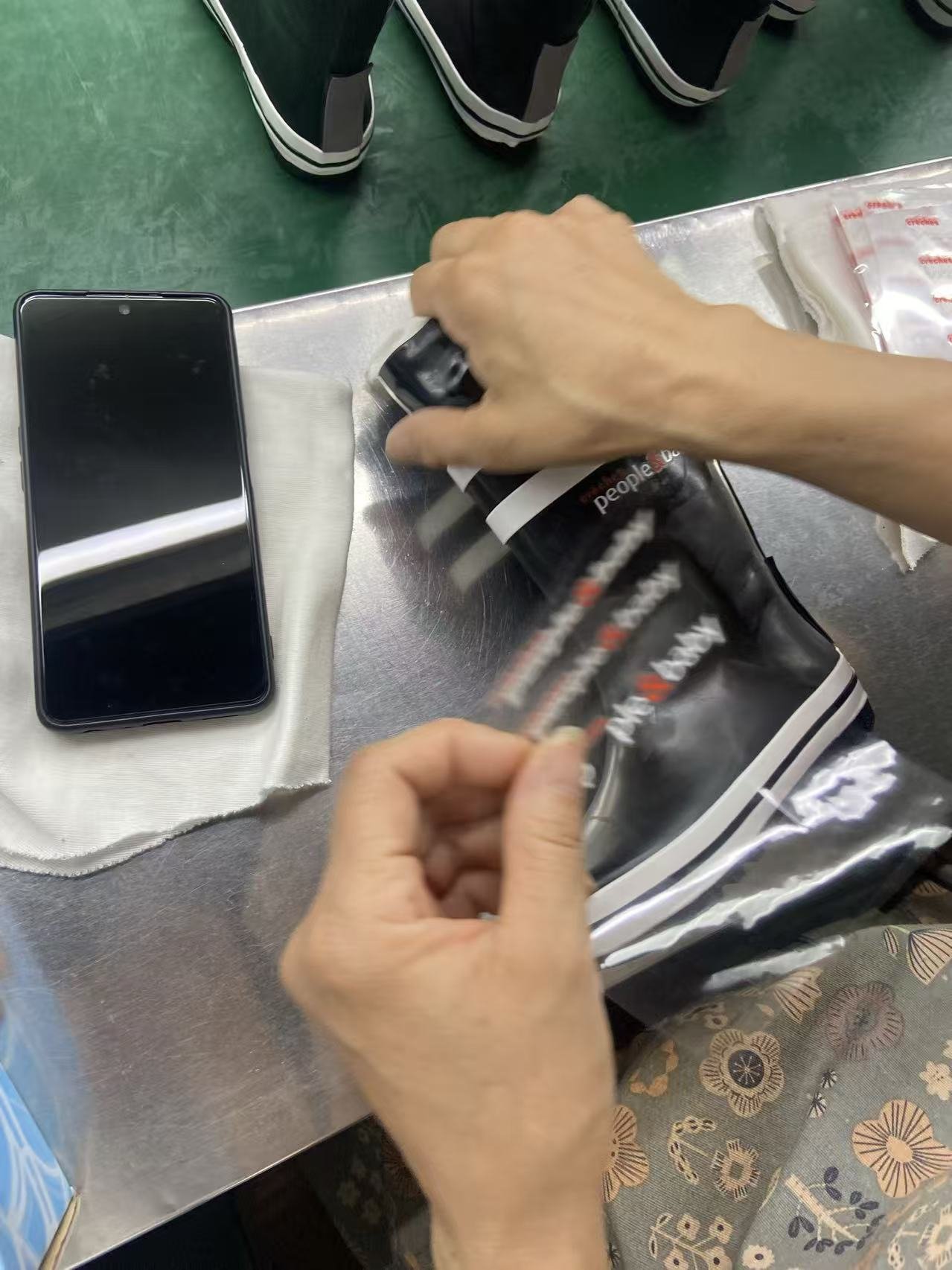
Depending on the product and construction, finishing may include:
- Removing excess material
- Trimming relevant areas
- Cleaning the product
- Checking surface appearance
- Completing applicable branding operations
- Preparing the boot for inspection
Branding requirements can vary significantly between OEM projects.
A buyer may require a relatively straightforward private-label product using an existing boot construction, while another project may involve more integrated branding or product-specific development.
The stage at which a logo or other branding element is applied depends on the product and branding method. For this reason, branding requirements should be confirmed during product development rather than added informally after production has already begun.
9. Quality Control During Rubber Boot Production
Quality control should not be treated only as an inspection performed after the entire order is finished.
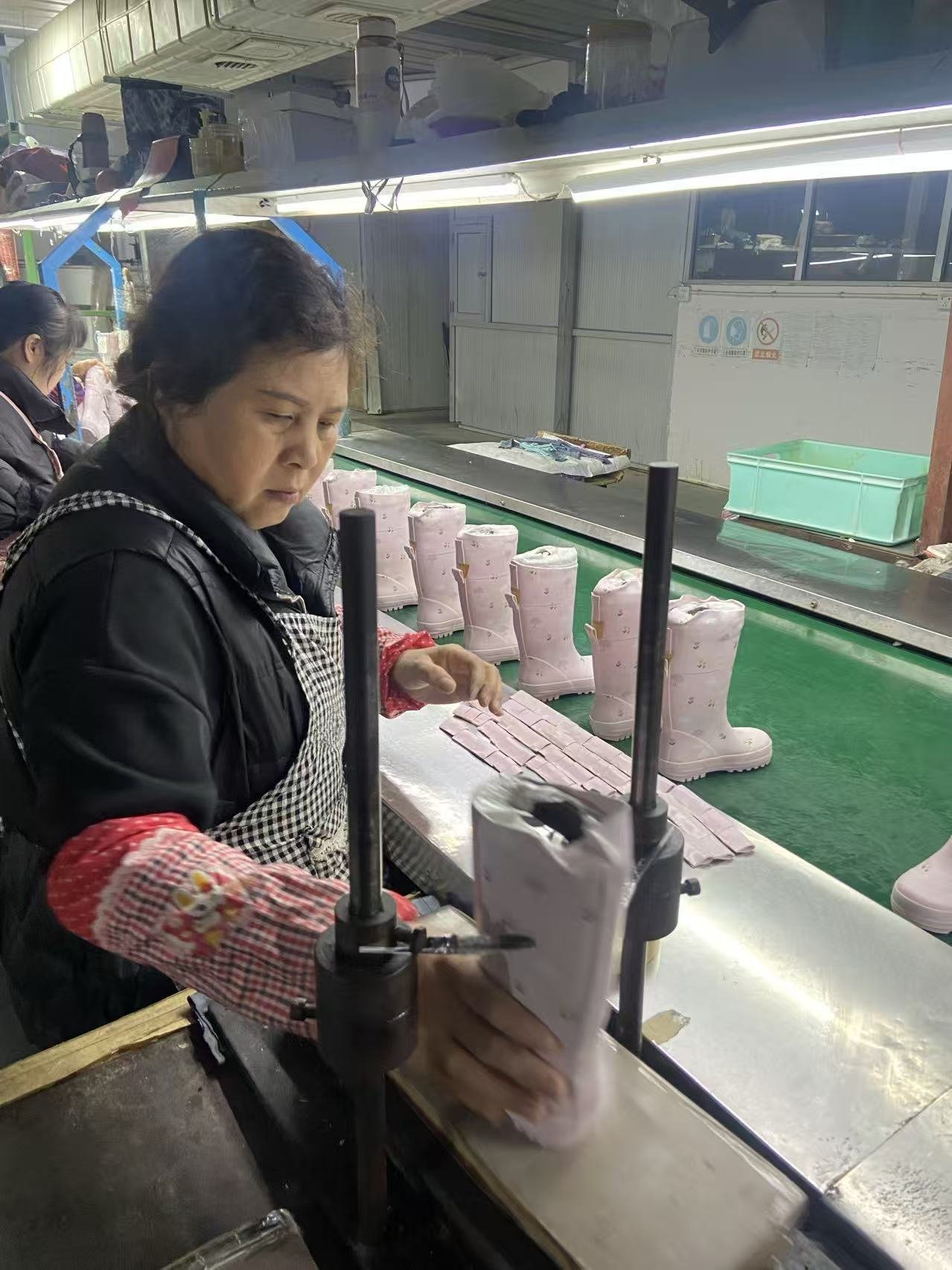
Production-stage checks can help identify problems before they affect a larger quantity of finished footwear.
Depending on the product and manufacturing stage, relevant checks may include:
- Materials and components
- Product construction
- Size
- Color
- Assembly
- Surface appearance
- Finishing
- Branding
The inspection criteria should be connected to the approved product specification and the requirements of the order.
Where rubber boots are intended for occupational use or marketed with protective claims, additional product or market requirements may apply. Buyers working with these products can review our guide to safety standards for OEM rain boot manufacturing.
The important principle is that quality requirements should be defined before production. A factory cannot reliably inspect against requirements that have never been clearly specified.
10. Final Inspection and Packing
After manufacturing and finishing are complete, the order moves into final inspection and packing.
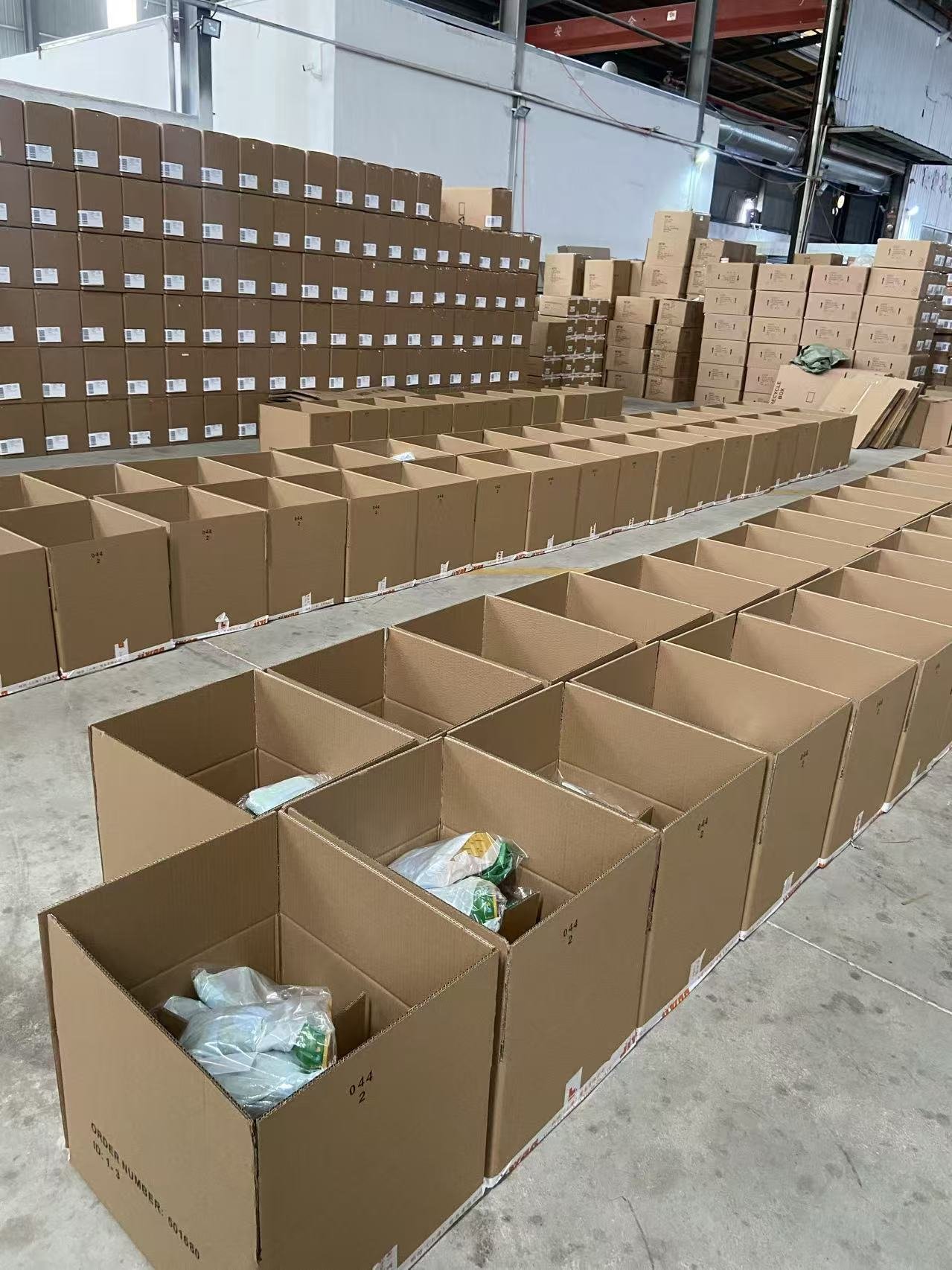
Depending on the order requirements, final checks may cover:
- Correct product and model
- Size identification
- Pair matching
- Color consistency
- Appearance and finishing
- Logo and labeling
- Individual packaging
- Carton quantities
- Carton markings
For importers and distributors, packing accuracy becomes especially important when an order contains multiple sizes, colors, or SKUs.
Products should be packed according to the agreed assortment so that the buyer can identify and distribute the goods efficiently after arrival.
Packaging should therefore be considered part of the purchasing specification rather than an afterthought at the end of production.
Buyers planning larger purchasing programs can also review our guide to wholesale rubber boots sourcing for more information about MOQ, size assortments, packaging, quotations, and repeat orders.
11. How OEM Requirements Affect the Manufacturing Process
OEM requirements can influence multiple stages of rubber boot production.
A customized order is not simply a standard product with a different name attached to it. The manufacturing impact depends on what the buyer wants to change.
| OEM Requirement | Possible Manufacturing Impact |
|---|---|
| Custom Color | Requires color requirements to be defined and controlled during production |
| Custom Logo | May affect branding method, tooling, or finishing depending on the design |
| Existing Mold | Uses available tooling when suitable for the required product and sizes |
| New Mold | Requires additional tooling development and approval |
| Custom Outsole | May affect construction, tooling, sampling, and production setup |
| Multiple Sizes | Requires the appropriate size tooling and production assortment planning |
| Private Label Packaging | Adds packaging specifications, artwork, labels, and packing requirements |
The more extensive the customization, the more important it becomes to confirm feasibility before bulk production.
Buyers should therefore separate requirements into two categories:
- Changes that can use an existing product platform
- Changes that require new product or tooling development
This distinction can make discussions about sampling, MOQ, development, and production much clearer.
For more information, review our OEM and customization capabilities or read our guide on how to choose a rubber boots manufacturer for an OEM project.
12. What B2B Buyers Should Check During a Factory Evaluation
Understanding the manufacturing process becomes particularly useful when a buyer is evaluating potential production partners.
Instead of looking only at a finished sample or product catalog, importers and brands can examine how the factory manages the stages behind the product.
Production
- Are relevant rubber boot products actually being manufactured?
- Which production processes are performed by the factory?
- Are any important processes handled externally?
Molds and Tooling
- Which molds and sizes are already available?
- Who manages the tooling?
- Can new tooling be developed when required?
Samples and Specifications
- How are samples developed?
- How are buyer revisions recorded?
- What becomes the final production reference?
Quality Control
- At which production stages are inspections performed?
- What requirements are used during inspection?
- How are production issues recorded and corrected?
Bulk and Repeat Production
- How is the approved specification transferred into bulk production?
- How are sizes, colors, branding, and packaging controlled?
- How are specifications maintained for repeat orders?
If you are currently comparing factories, see our rubber boots manufacturer evaluation guide.
It is also useful to understand the difference between a company that manufactures the footwear and one that primarily coordinates sourcing. Our rubber boots supplier vs manufacturer guide explains the different sourcing structures in more detail.
13. Rubber Boots Manufacturing Process Checklist
The following checklist summarizes the main manufacturing stages B2B buyers should understand when discussing an OEM or bulk rubber boot order.
| Stage | What B2B Buyers Should Understand |
|---|---|
| Product Specification | Target application, construction, sizes, colors, branding, and packaging |
| Materials | Rubber materials and components required for the product |
| Molds & Tooling | Whether existing tooling can be used or new development is required |
| Component Forming | How the required boot components are prepared for production |
| Assembly | How the components are combined into the required boot construction |
| Vulcanization | How curing is controlled as part of the rubber manufacturing process |
| Finishing | Trimming, cleaning, appearance, and applicable branding operations |
| In-Process QC | Which production characteristics are checked before completion |
| Final Inspection | How finished products are checked against approved requirements |
| Packing | Size assortment, labels, packaging, carton quantities, and markings |
| Repeat Production | How approved specifications are maintained between orders |
For buyers, understanding these stages makes it easier to discuss product requirements with a factory, evaluate manufacturing capability, and identify which production details should be confirmed before placing a bulk order.
Looking for a Rubber Boots Manufacturing Partner?
Understanding how rubber boots are made gives B2B buyers a clearer view of what happens between product development and finished bulk production.
Materials, tooling, component preparation, assembly, vulcanization, finishing, inspection, and packing all form part of the manufacturing program. For customized products, these stages also need to reflect the approved OEM requirements.
When evaluating a production partner, focus not only on the finished sample but also on how the factory manages specifications, molds, manufacturing processes, quality control, and repeat production.
Jolly Boots supports rubber boot manufacturing and OEM projects for brands, importers, distributors, and wholesale buyers.
Explore our rubber boots manufacturing capabilities, review our OEM and customization capabilities, or send us your product requirements to discuss your project.
Explore Rubber Boot Manufacturing | Discuss Your OEM Requirements | Request a Factory Quote