Finding the right Wellington boot suppliers involves more than comparing product catalogs and unit prices. For importers, distributors, wholesalers, and private-label brands, the right sourcing partner also needs to match the target market, product requirements, order structure, customization needs, and quality expectations.
Two suppliers may offer visually similar Wellington boots but provide very different manufacturing capabilities, size ranges, materials, molds, OEM options, quality-control processes, and support for repeat orders.
For this reason, B2B buyers should evaluate the complete sourcing program rather than selecting a supplier based on price alone.
This guide explains how to evaluate Wellington boot suppliers for wholesale, OEM, and private-label orders, including product selection, supplier type, materials, MOQ, customization, samples, quality control, packaging, and repeat production.
1. What Should B2B Buyers Look for in a Wellington Boot Supplier?
A suitable Wellington boot supplier should be evaluated according to the requirements of the actual purchasing program.
Before requesting quotations, buyers should consider five main areas:
Product Fit
Does the supplier offer Wellington boots suitable for your target market, intended application, size range, and product positioning?
Manufacturing Capability
Who actually manufactures the boots? Understanding who controls production becomes more important when the order involves tooling, product development, or detailed specifications.
OEM Capability
Can the supplier support the level of customization required by your brand, from basic private labeling to more extensive product development?
Commercial Fit
Are the MOQ, size assortment, color requirements, packaging options, and order structure suitable for your purchasing program?
Quality and Repeatability
How are samples approved, bulk production inspected, and product specifications maintained for future orders?
The objective is not simply to find a company that sells Wellington boots. It is to find a supply structure that can consistently deliver the product your market requires.
2. Choose Wellington Boots for the Target Market
Wellington boots are used across different markets, so sourcing should begin with the intended customer and application rather than with a generic product catalog.
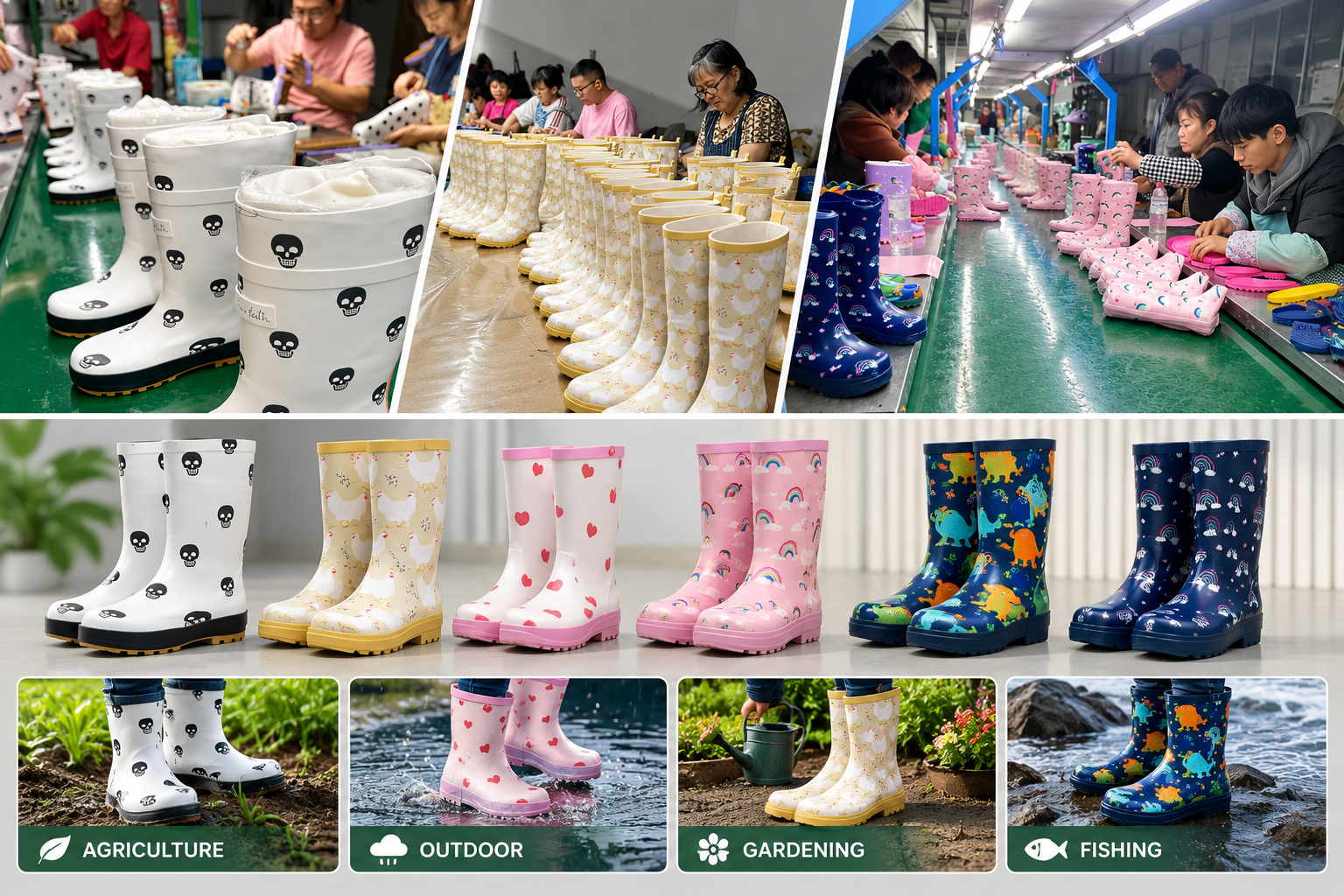
Agriculture and Farming
For agricultural and farm markets, buyers may prioritize waterproof coverage, outsole design, ease of cleaning, durability for the intended environment, and practical sizing.
Fishing and Wet Environments
Fishing and other consistently wet working environments may place greater emphasis on waterproof construction, outsole characteristics, boot height, and ease of movement.
Industrial and Work Applications
Work-oriented Wellington boots should be selected according to the actual workplace and required product features. If protective claims are involved, buyers should also determine which testing or market requirements apply.
Outdoor and General Waterproof Use
For outdoor, garden, and general waterproof footwear markets, product weight, flexibility, comfort, styling, colors, and retail positioning may become more important.
Retail and Consumer Programs
Retail-oriented Wellington boots may require greater attention to colors, appearance, branding, packaging, size assortment, and how the product fits into the buyer's existing range.
The same boot is not automatically suitable for every market. Defining the target customer first helps buyers narrow the product range before discussing price, MOQ, or customization.
3. Manufacturer, Supplier or Trading Company?
Companies supplying Wellington boots can operate under different business models.
A supplier may manufacture the footwear directly, work with an external factory, coordinate production through manufacturing partners, or provide existing products through a broader sourcing network.
For B2B buyers, the company label matters less than understanding who controls the important parts of the order.
Ask questions such as:
- Who actually manufactures the Wellington boots?
- Who controls the molds and tooling?
- Who develops and revises samples?
- Who records the final product specification?
- Who performs production and final inspection?
- Who manages repeat production?
A direct manufacturer may be particularly relevant when a project requires more product-specific development, while other sourcing structures can also be practical for established products or broader purchasing programs.
For a more detailed explanation, see our guide to the differences between a boot supplier and manufacturer.
4. Evaluate the Supplier's Wellington Boot Range
A large catalog does not necessarily mean that a supplier is the right choice for your business.
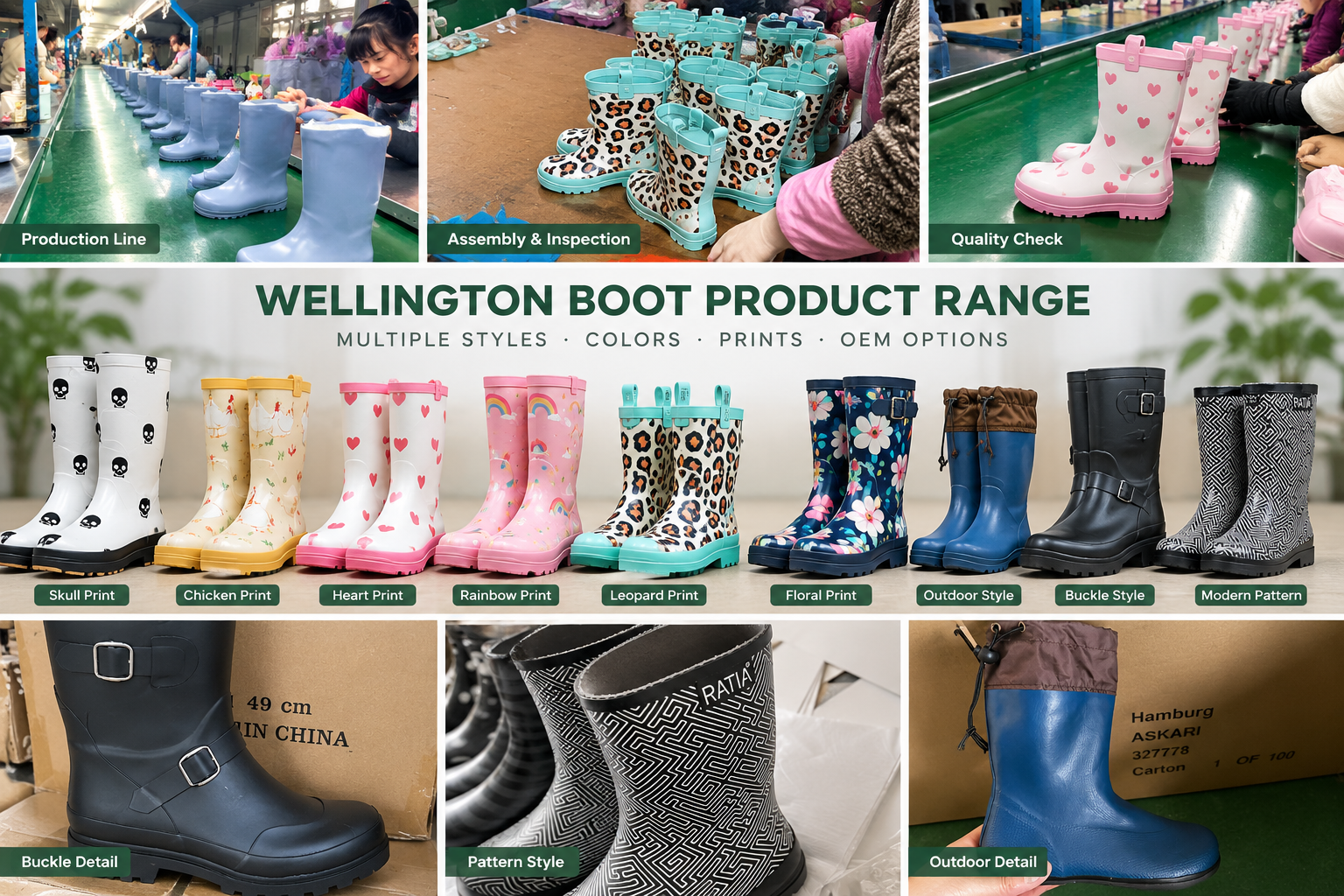
Instead, evaluate whether the available product range matches your target market and purchasing plan.
Useful points to confirm include:
- Available boot heights
- Adult or children's size ranges
- Available molds
- Outsole options
- Standard colors
- Lining options where applicable
- General-purpose or work-oriented designs
- Products suitable for OEM or private-label programs
Existing product platforms can be useful for buyers who do not need to develop an entirely new boot. Depending on the product, an established construction may provide a starting point for changes to color, branding, packaging, or other selected features.
If you want additional background on the product category itself, our article on classic Wellington boot design explains how the traditional style relates to modern OEM manufacturing.
You can also explore our PVC Wellington boot options for B2B and OEM sourcing.
5. Compare Wellington Boot Materials and Construction
The term “Wellington boot” describes a type of waterproof boot, but it does not mean that every Wellington boot uses the same material or construction.
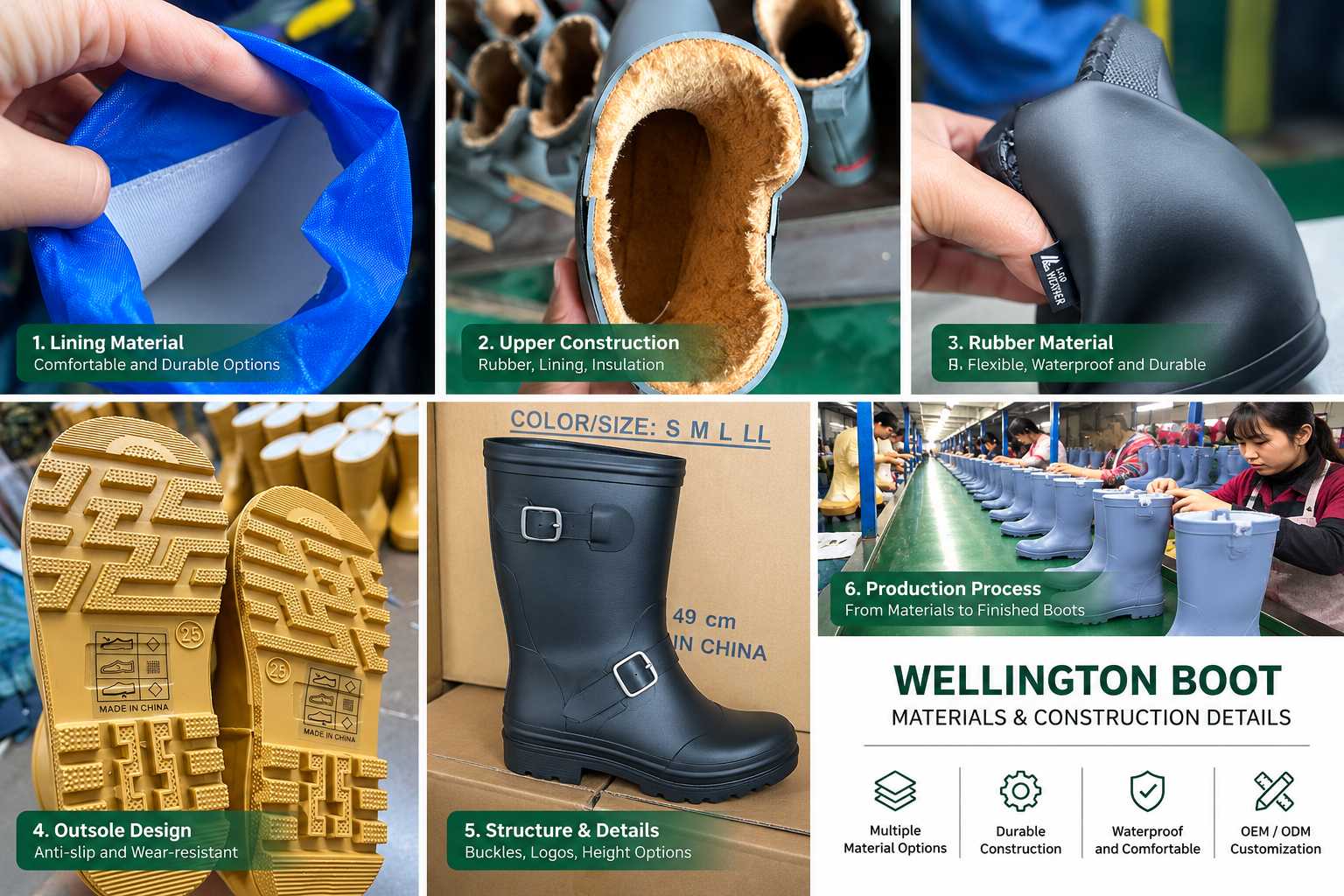
When evaluating a product, buyers should confirm characteristics such as:
- Primary material
- Upper construction
- Outsole construction and tread
- Lining where applicable
- Boot height
- Size range
- Intended application
PVC and rubber constructions can involve different material characteristics, production methods, product positioning, and customization considerations. Neither material should automatically be treated as the best choice for every application.
The appropriate choice depends on the target market, product specification, price positioning, expected use, and sourcing program.
For a more detailed comparison, read our PVC vs rubber rain boots guide for B2B buyers.
6. Understand MOQ, Sizes and SKU Planning
MOQ is an important consideration when sourcing wholesale Wellington boots, but buyers should avoid evaluating minimum order quantities as a single number without understanding the product configuration.
The practical order structure may depend on:
- Model
- Material
- Color
- Size range
- Quantity per size
- Existing or new molds
- Branding requirements
- Packaging
For example, an order containing one style in several colors and multiple sizes quickly becomes a multi-SKU purchasing program.
| Order Variable | Example Planning Question |
|---|---|
| Style | How many Wellington boot models are being ordered? |
| Color | How many colors are required for each model? |
| Size | How will the quantity be distributed across the available sizes? |
| Branding | Does the order use standard products or private-label branding? |
| Packaging | Is standard or customized packaging required? |
A useful way to think about the order is:
Style × Colors × Sizes = SKU Plan
Before requesting a final quotation, importers and distributors should therefore prepare an estimated quantity by style, color, and size rather than providing only a total pair quantity.
7. Evaluate OEM and Private Label Options
Not every buyer needs the same level of customization.
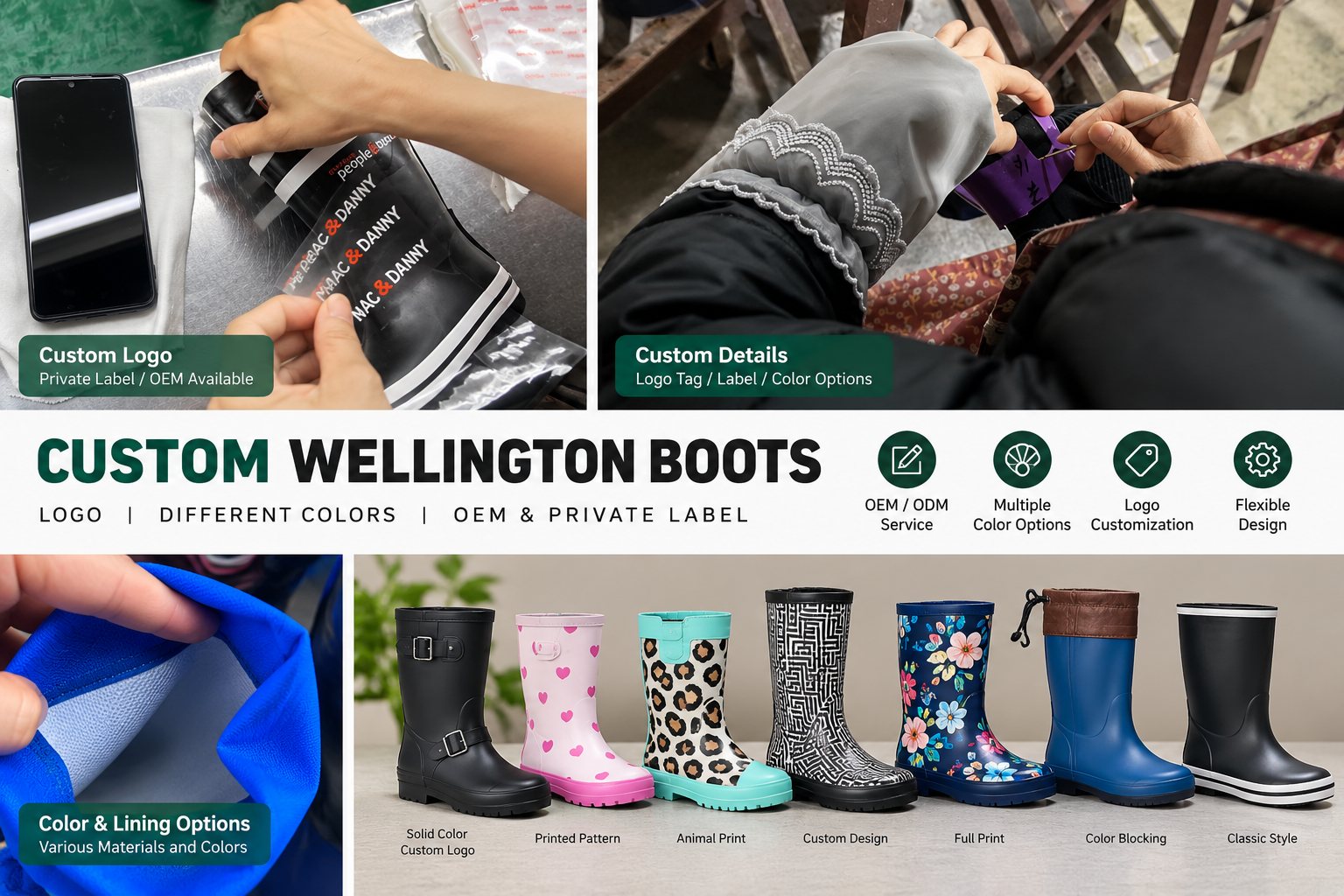
For Wellington boot sourcing, customization can generally be considered at three levels.
Existing Product for Bulk Orders
The buyer selects an existing product with available specifications and uses it primarily as a wholesale purchasing program.
Private Label
An existing product platform may be adapted with selected branding elements such as colors, logos, labels, or packaging, depending on the product and manufacturing setup.
OEM Product Development
More differentiated projects may involve changes to the product construction, outsole, molds, tooling, or other product-specific features.
More customization is not automatically better. An importer launching a new market may benefit from using an established product platform, while a brand developing a differentiated long-term product line may require deeper OEM development.
The right level depends on the commercial objective.
Buyers planning branded or customized products can review our OEM and customization capabilities to understand the available development options.
8. Review Samples Before Bulk Production
Samples provide an important opportunity to evaluate the Wellington boot before committing to bulk production.
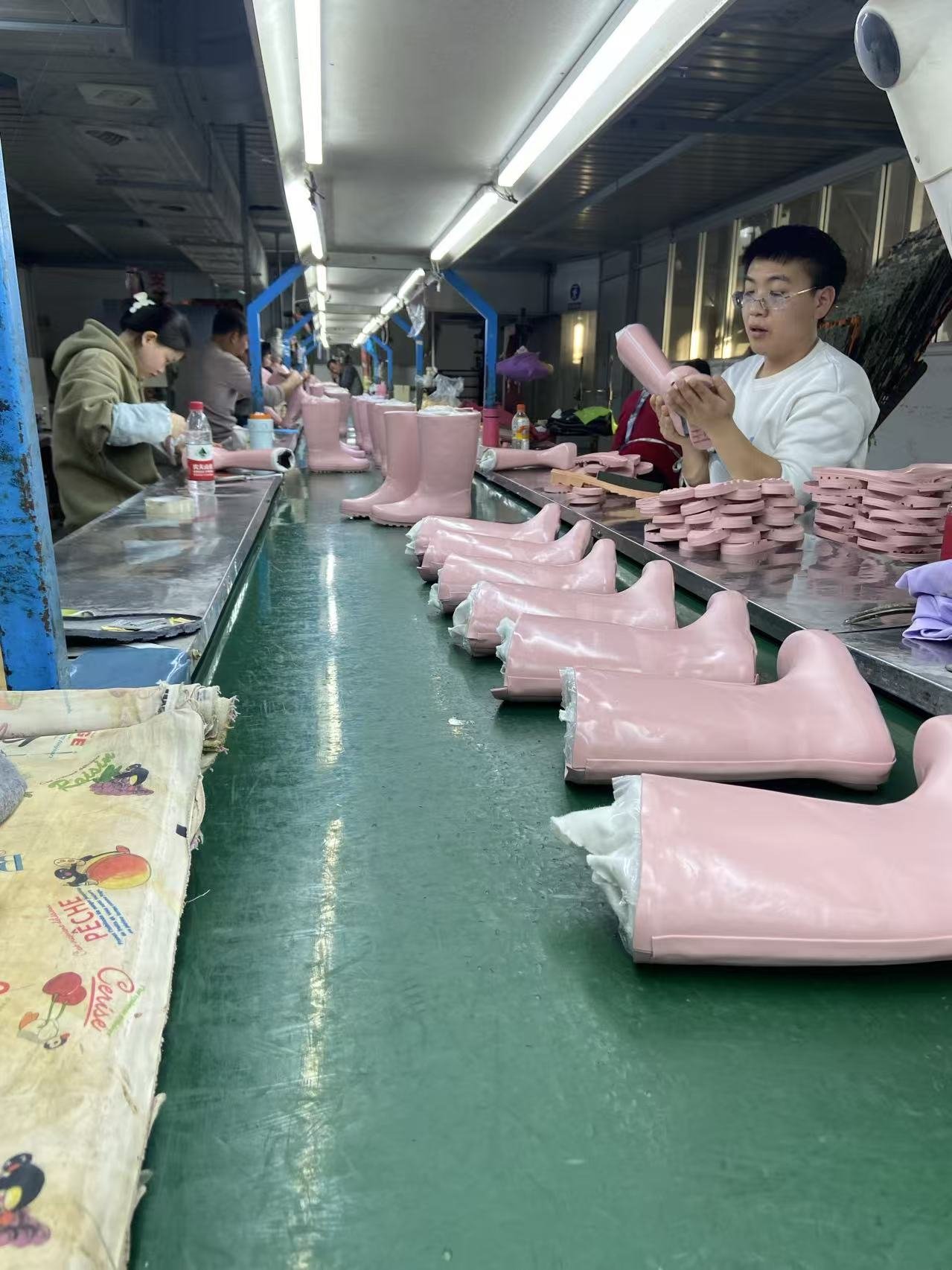
Depending on the product and project, buyers may evaluate:
- Overall construction
- Size and fit
- Boot height
- Color
- Outsole and tread
- Flexibility
- Surface appearance
- Logo and branding
- Labels
- Packaging
For customized orders, the sample-review process should also record requested revisions clearly.
Once the product is approved, the final sample and documented specification can provide references for bulk production.
This is particularly important when several revisions have been made. Buyers and suppliers should be clear about which sample and specification represent the final approved version.
9. Evaluate Quality Control and Testing
Quality control should be connected to the approved product specification rather than treated as a general promise that products will be “checked before shipment.”
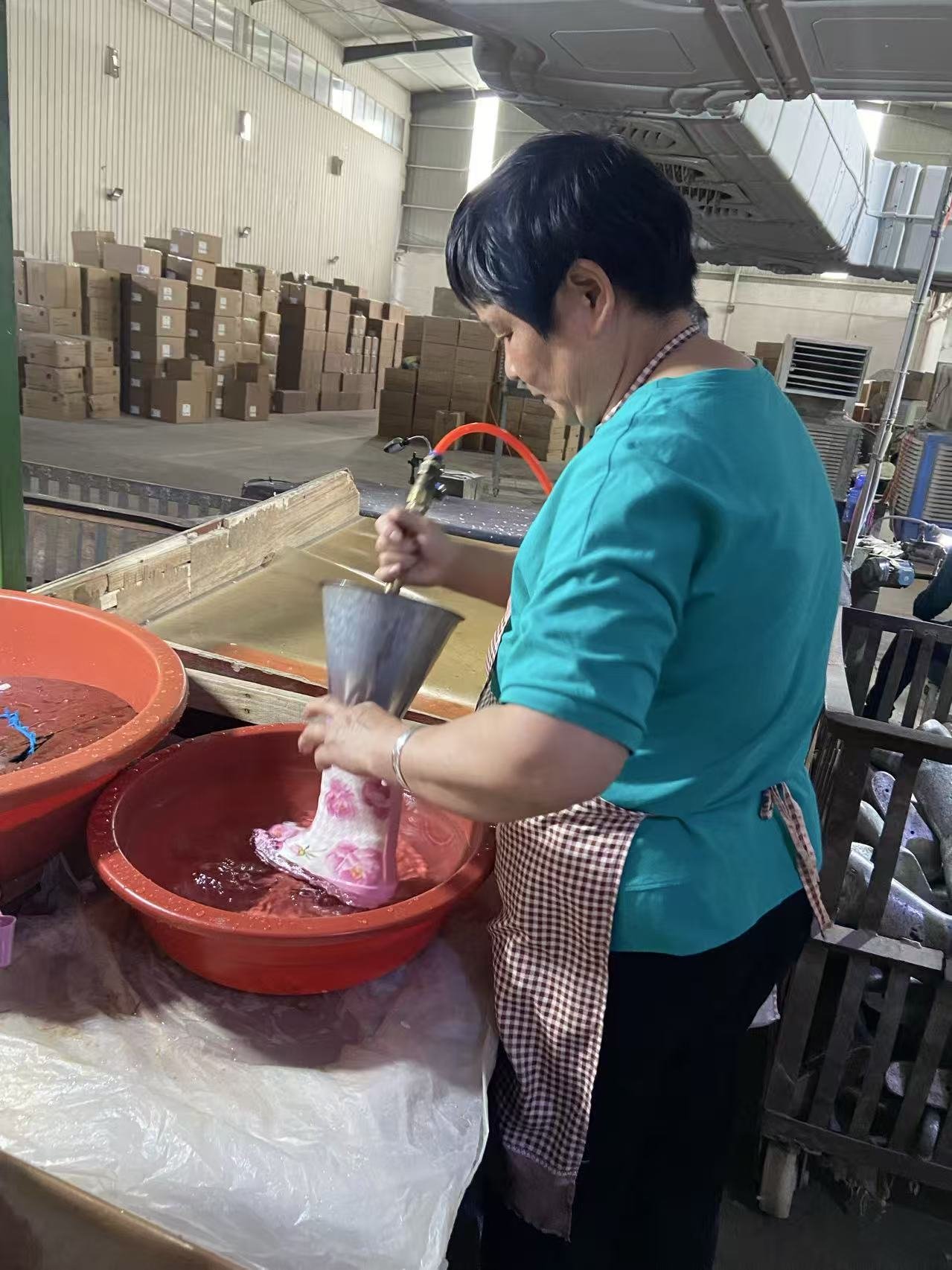
Depending on the product and order, relevant checks may include:
- Product construction
- Size and markings
- Color
- Pair matching
- Surface appearance
- Outsole
- Logo and branding
- Labels
- Packaging
Buyers should also distinguish between general-purpose waterproof Wellington boots and products intended for occupational or protective applications.
If a boot will be marketed with safety or protective claims, applicable requirements should be identified for the intended market and product before production. Our guide to safety standards for OEM rain boot manufacturing explains why this should be considered during product development rather than after the order has been produced.
10. Compare Wellington Boot Quotations Correctly
Price comparison is useful only when suppliers are quoting substantially comparable products and commercial requirements.
Before comparing unit prices, confirm that quotations are based on the same or clearly defined:
- Product construction
- Material
- Outsole
- Lining or internal components
- Size range
- Colors
- Logo requirements
- Packaging
- Order quantity
- Testing requirements where applicable
- Tooling requirements
- Delivery terms
For OEM projects, buyers should also confirm whether sample development, molds, tooling, custom packaging, testing, or inspection costs are included in the quotation or handled separately.
Incoterms should also be compared on the same basis.
A lower unit price is meaningful only when the underlying product and commercial requirements are comparable.
If you are comparing potential production partners rather than only products, our rubber boots manufacturer evaluation guide provides an additional framework for reviewing manufacturing capability, tooling, samples, quality control, and export communication.
11. Plan Packaging, Shipping and Repeat Orders
For distributors and importers, the sourcing program continues beyond production.
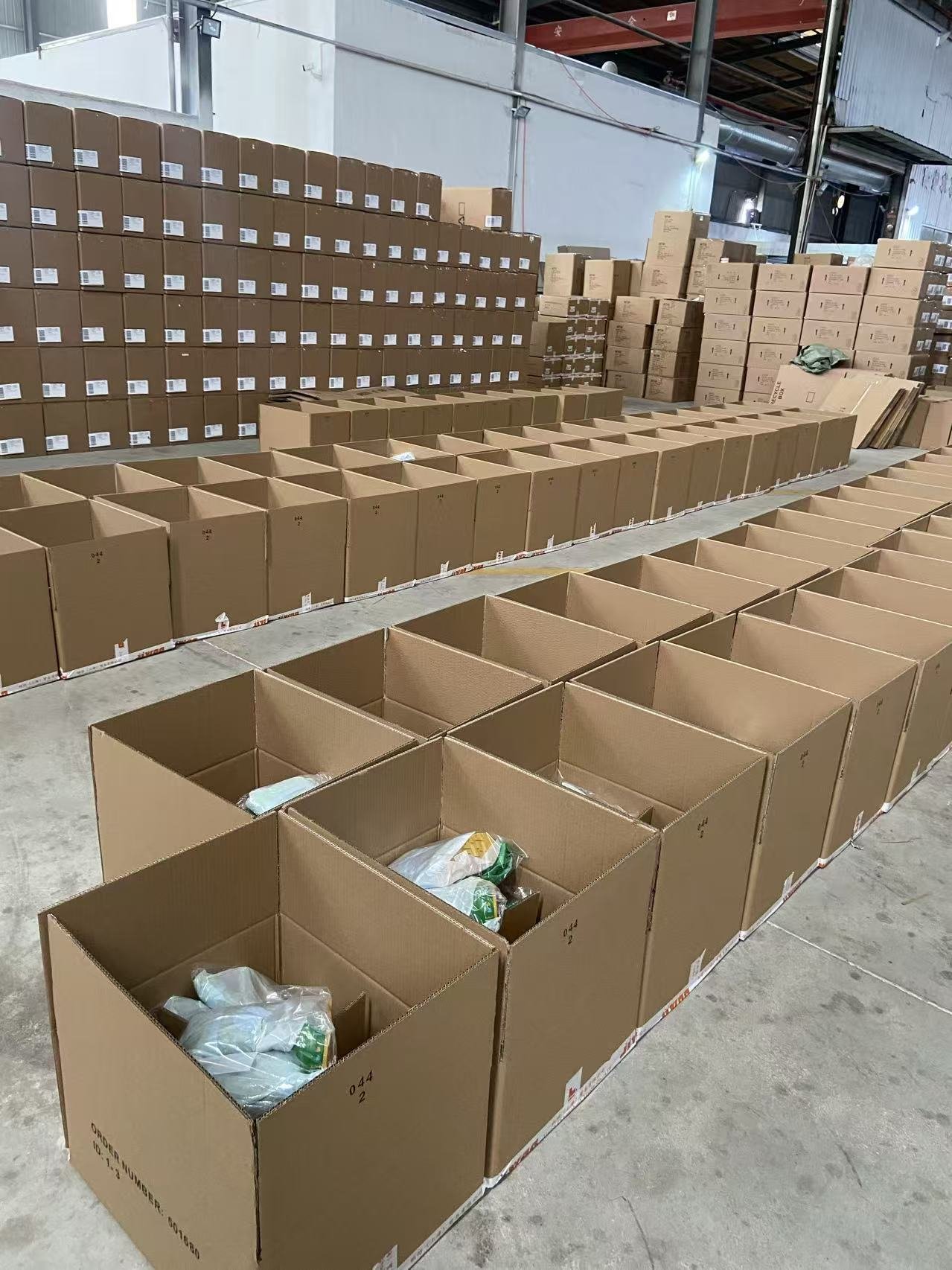
Before confirming an order, buyers should define relevant packaging requirements such as:
- Individual packaging
- Retail packaging where required
- Product labels
- Barcodes where applicable
- Size and color identification
- Inner and outer cartons
- Carton quantities
- Carton markings
Clear SKU identification becomes especially important when one shipment contains multiple styles, colors, and sizes.
Buyers should also think beyond the first order.
For a repeat purchasing program, the supplier should have a clear reference for the approved construction, colors, branding, packaging, and other product specifications.
For distributors, repeat-order consistency can be as important as the first shipment because unexpected changes can affect inventory planning and product continuity in the market.
12. Questions to Ask Wellington Boot Suppliers
Before selecting a Wellington boots supplier, B2B buyers can use the following questions to clarify both product and sourcing capability:
- Do you manufacture the Wellington boots directly?
- Which Wellington boot constructions do you regularly supply?
- Which materials are available for the product we are considering?
- What sizes and molds are currently available?
- What is the MOQ for our specific model, colors, and size assortment?
- Can product colors be customized?
- What logo and branding options are available?
- Can you support private-label packaging?
- Which product changes would require new molds or tooling?
- How are samples developed, revised, and approved?
- How is bulk production inspected?
- What testing requirements apply to the intended product and target market?
- How are approved specifications maintained for repeat orders?
- Who is responsible for export and shipment preparation under the agreed commercial terms?
Specific answers to these questions are generally more useful than broad statements such as “OEM available” or “quality guaranteed.”
13. Wellington Boot Supplier Evaluation Checklist
The following checklist can help importers, distributors, and brands compare potential Wellington boot suppliers on a consistent basis.
| Area | What to Confirm |
|---|---|
| Target Market | Who will use or buy the finished Wellington boots? |
| Product Range | Does the supplier offer relevant Wellington boot styles? |
| Manufacturing | Who actually manufactures the footwear? |
| Material | Which material and construction are being quoted? |
| Sizes | Which size molds and ranges are available? |
| MOQ | What minimum applies to the actual style, color, size, and branding configuration? |
| Colors | Which standard and custom color options are available? |
| OEM | Which product elements can be customized? |
| Tooling | Can existing molds be used, or is new tooling required? |
| Samples | How are samples developed and approved? |
| Quality Control | What is checked during production and final inspection? |
| Testing | Which requirements apply to the intended product and market? |
| Packaging | Can wholesale, retail, or private-label packaging requirements be supported? |
| Shipping | What responsibilities are included under the agreed commercial terms? |
| Repeat Orders | How are approved product specifications maintained? |
A supplier does not need to offer the largest catalog or the greatest number of customization options. The more important question is whether its products, manufacturing structure, MOQ, quality process, and commercial capabilities match the buyer's sourcing program.
Looking for a Wellington Boot Supplier?
Choosing a Wellington boot supplier requires more than finding a suitable product photograph and comparing unit prices.
Importers, distributors, wholesalers, and brands should evaluate the target application, product construction, materials, available sizes, MOQ, customization options, samples, quality control, packaging, and repeat-order requirements as one complete sourcing program.
For private-label and OEM projects, it is also important to understand who controls manufacturing, tooling, product specifications, and bulk-production quality.
Jolly Boots supports Wellington boot sourcing and OEM development for brands, importers, distributors, and wholesale buyers.
Explore our PVC Wellington boot options, review our OEM and customization capabilities, or send us your product requirements for project evaluation.
Explore Wellington Boot Options | Discuss Your OEM Requirements | Request a Factory Quote