PVC and rubber are two commonly used material categories for waterproof boots, but they differ in material characteristics, manufacturing methods, product positioning and sourcing considerations.
For B2B buyers, choosing between PVC and rubber rain boots should not be based on material reputation alone.
A distributor sourcing practical waterproof work boots may have different priorities from a brand developing premium outdoor footwear. Cost targets, flexibility, weight, product design, order volume and intended application can all influence which material is more appropriate.
There is therefore no universal answer to whether PVC or rubber rain boots are “better.”
This guide compares PVC and rubber rain boots from a B2B sourcing perspective, including material characteristics, manufacturing, durability, comfort, applications, OEM customization and purchasing considerations.
1. What Is the Main Difference Between PVC and Rubber Rain Boots?
The main difference between PVC and rubber rain boots is the material system and the manufacturing process used to create the finished footwear.
PVC boots are made using polyvinyl chloride-based compounds formulated for waterproof footwear. Many PVC rain boots are produced through molding processes that allow the material to form the boot construction.
Rubber rain boots use rubber-based compounds and manufacturing processes appropriate to the selected construction and design.
Both materials can be used to produce waterproof footwear, but they do not necessarily result in identical products.
PVC Rain Boots
PVC footwear can be suitable for applications where buyers prioritize factors such as:
Waterproof protection
Practical work use
Consistent molded production
Color options
OEM branding
Bulk-order efficiency
PVC boots are commonly found in work, agriculture, fishing and other wet environments.
Rubber Rain Boots
Rubber boots are also widely used for waterproof footwear and can be selected for products where buyers prioritize particular flexibility, feel, construction or market positioning.
Depending on the design, rubber boots may be used in:
Outdoor footwear
Work applications
Agriculture
Fishing
Lifestyle markets
Premium rain footwear
Material Alone Does Not Define Product Quality
A PVC boot is not automatically a low-quality product, and a rubber boot is not automatically a premium product.
Finished footwear quality also depends on factors such as:
Material formulation
Product design
Construction
Manufacturing control
Outsole
Fit
Quality inspection
Intended application
B2B buyers should therefore compare finished product specifications rather than making a sourcing decision based only on the words “PVC” or “rubber.”
| Factor | PVC Rain Boots | Rubber Rain Boots |
|---|---|---|
| Material | PVC-based compound | Rubber-based compound |
| Waterproof Use | Yes | Yes |
| Product Positioning | Work / industrial / general | Work / outdoor / lifestyle |
| Color Customization | Available | Available |
| OEM Potential | Yes | Yes |
| Best Choice | Depends on specification | Depends on specification |
2. Manufacturing Process: PVC vs Rubber Boots
PVC and rubber boots can involve different manufacturing processes, and this can influence product development, tooling, design options and production planning.
PVC Boot Manufacturing
PVC rain boots can be produced using molding equipment that forms the prepared PVC material according to the selected boot construction.
A typical production program may involve:
Material preparation
Color preparation
Mold setup
Molding
Cooling and demolding
Trimming and finishing
Inspection
Packing
For OEM projects, existing molds can often provide a practical starting point for customization.
Rubber Boot Manufacturing
Rubber footwear production depends on the selected construction and factory process.
Depending on the product, manufacturing can involve rubber compound preparation, individual components, forming, assembly, vulcanization and finishing processes.
The exact process should be evaluated according to the specific rubber boot rather than assuming every rubber product is manufactured in the same way.
Why Manufacturing Method Matters to Buyers
The production process can affect sourcing decisions involving:
Tooling
Product development
Sampling
Design flexibility
Production planning
Order quantity
Lead time
Cost structure
For this reason, buyers developing a new rain boot should consider not only the finished appearance but also whether the selected manufacturing process is appropriate for the expected order volume and product strategy.
Buyers interested in the production stages can see our complete guide to the PVC rain boots manufacturing process and quality control.
3. Cost and B2B Order Considerations
Cost is often one of the main reasons B2B buyers compare PVC and rubber footwear, but the material name alone is not enough to determine the final purchasing price.
The cost of a rain boot can be influenced by:
Material formulation
Boot height
Product weight
Outsole construction
Size range
Protective features
Logo and customization
Packaging
Order quantity
Tooling requirements
Quality and testing requirements
PVC Can Be Practical for Volume-Oriented Programs
For certain work, agricultural or general waterproof footwear programs, PVC construction can provide a practical option for buyers who need consistent bulk production and clearly defined specifications.
Using an existing boot construction can also reduce the amount of new product development required for an initial OEM order.
Rubber Products Can Have Different Cost Structures
Rubber footwear may involve different material and production processes, so buyers should evaluate the complete product rather than applying a fixed price assumption to all rubber boots.
A simple rubber product and a highly developed multi-component rubber boot are not directly comparable.
Compare Equivalent Specifications
When requesting quotations, avoid comparing:
A basic PVC work boot
with:
A highly customized rubber outdoor boot
and concluding that the price difference is caused only by material.
Instead, compare products with similar:
Height
Weight
Outsole
Lining
Protective features
Size range
Branding
Packaging
Testing requirements
This gives buyers a more meaningful understanding of the cost difference between the two constructions.
4. Weight, Flexibility and Comfort
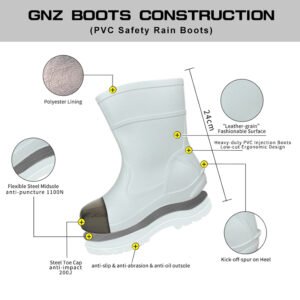
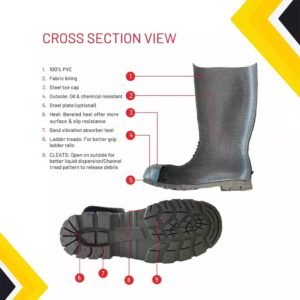
Weight, flexibility and comfort can vary significantly between individual boot designs, even when two products use the same general material category.
For this reason, buyers should evaluate actual samples rather than assuming that every PVC or rubber boot will feel the same.
Weight
Finished boot weight depends on more than whether the material is PVC or rubber.
Factors such as boot height, wall thickness, outsole design, protective components and overall construction can significantly change the final weight.
When weight is important to the target market, request actual product specifications or evaluate samples.
Flexibility
Both PVC and rubber formulations can be developed with different physical characteristics.
The flexibility experienced by the wearer also depends on:
Material formulation
Boot thickness
Shaft design
Outsole
Temperature
Overall construction
A material comparison without considering these factors can therefore be misleading.
Comfort
Comfort is not determined by upper material alone.
Buyers should also evaluate:
Fit
Size consistency
Boot opening
Calf dimensions
Footbed or insole
Lining
Boot weight
Flex points
Intended wearing duration
For B2B sourcing, physical samples and wear evaluation are more useful than relying only on general material claims.
5. Durability: Is Rubber More Durable Than PVC?
It is too broad to say that every rubber boot is more durable than every PVC boot.
Durability depends on the material formulation, product construction, manufacturing quality and the conditions in which the footwear is used.
A well-designed PVC work boot used for its intended application may provide more appropriate service than a different boot construction selected for the wrong environment.
Consider the Actual Working Conditions
Buyers should evaluate factors such as:
Frequency of use
Walking surface
Temperature
Mud and water exposure
Oils or other substances
Flexing requirements
Cleaning methods
Storage conditions
These factors can affect footwear differently.
Define What “Durability” Means
For one buyer, durability may mean resistance to repeated flexing.
For another, it may mean outsole wear.
Another may be concerned primarily with waterproof integrity or performance in a specific working environment.
Instead of asking only, “Which material lasts longer?”, define the expected application and the type of performance that matters most.
Test the Finished Product
Material names provide useful general information, but the finished boot should ultimately be evaluated against the buyer’s requirements.
For larger OEM programs, sample evaluation and relevant product testing can provide better evidence than broad claims about one material category being universally superior.
6. Which Material Is Better for Different Applications?
The appropriate material depends on the product’s intended use, target market, price position and required construction.
Industrial and Wet Work
PVC can be a practical option for many industrial and general wet-work applications where waterproof protection, molded construction and bulk production are important.
However, buyers sourcing safety footwear should also define protective and compliance requirements separately from the upper material.
Agriculture
Both PVC and rubber boots can be used in agricultural environments.
The decision should consider:
Mud conditions
Required boot height
Outsole design
Flexibility
Cleaning
Wearing duration
Target price
Required protection
Fishing and Marine Applications
Both materials can also be used for fishing and marine footwear.
Buyers should pay particular attention to waterproof construction, outsole requirements, fit and the actual wet environment in which the boot will be used.
Outdoor and Lifestyle Markets
Rubber constructions are frequently considered for outdoor and lifestyle rain footwear where product feel, design, flexibility or market positioning may be important.
However, the appropriate construction still depends on the specific product concept and target customer.
Volume-Oriented Waterproof Footwear
For buyers sourcing practical waterproof footwear in larger quantities, an existing PVC boot construction can provide an efficient starting point for OEM development.
Colors, branding and packaging can then be adapted to the target market without necessarily developing an entirely new product.
| Application | PVC | Rubber | Main Buying Consideration |
|---|---|---|---|
| Industrial Wet Work | Strong option | Possible | Protection & outsole |
| Agriculture | Strong option | Strong option | Mud, fit & durability |
| Fishing | Strong option | Strong option | Waterproofing & traction |
| Outdoor / Lifestyle | Possible | Strong option | Design & market position |
| Volume OEM Programs | Strong option | Depends on product | Cost & development |
7. OEM Customization: PVC vs Rubber
Both PVC and rubber rain boots can support OEM development, but the available customization options and development process depend on the selected construction.
PVC OEM Options
Depending on the existing product and project requirements, PVC boot customization may include:
Boot colors
Outsole colors
Logo and branding
Labels
Packaging
Existing outsole options
Size ranges
Selected functional features
For projects using an existing construction, buyers may be able to create a differentiated private-label product without developing every component from the beginning.
Rubber OEM Options
Rubber boot customization can also include colors, branding, construction details and packaging.
More complex designs may involve multiple components and different product-development requirements depending on the construction.
New Tooling
For either material, proprietary shapes or outsole designs may require new tooling.
Buyers should therefore determine which product features truly need to be unique before investing in new development.
For many first orders, an existing construction with carefully selected branding and color customization can be a more practical starting point.
For a closer look at logo, color, outsole, mold and private-label development, see our guide to custom PVC rain boots and OEM options.
8. PVC vs Rubber Rain Boots: Quick Comparison
| Factor | PVC | Rubber |
|---|---|---|
| Waterproof Footwear | ✓ | ✓ |
| Industrial / Work Use | Common | Common |
| Agriculture | Suitable | Suitable |
| Fishing | Suitable | Suitable |
| Lifestyle Positioning | Possible | Common |
| Color Customization | Available | Available |
| Logo / Private Label | Available | Available |
| Existing-Mold OEM | Often practical | Depends on construction |
| New Tooling Possible | Yes | Yes |
| Weight | Depends on design | Depends on design |
| Flexibility | Depends on formulation | Depends on formulation |
| Durability | Application-dependent | Application-dependent |
| Best Choice | Based on project | Based on project |
9. Questions to Ask Before Choosing PVC or Rubber
Before deciding which material to source, B2B buyers should define the product requirements first.
Ask the following questions:
Where will the boots be used?
Is the product for work, agriculture, fishing, outdoor or lifestyle use?
What waterproof coverage is required?
Are protective features required?
What outsole performance is needed?
Is boot weight an important consideration?
What level of flexibility is expected?
What is the target price position?
What is the expected order quantity?
Is an existing boot construction acceptable?
What colors and branding are required?
Is proprietary tooling necessary?
What testing or compliance requirements apply?
How will the product be packaged and sold?
Once these questions are answered, comparing PVC and rubber options becomes much more meaningful.
PVC or Rubber: Which Should You Choose?
PVC and rubber can both be suitable materials for waterproof boots. The better choice depends on the intended application, product construction, target market, order volume, customization requirements and commercial positioning.
For B2B buyers, the most useful approach is to compare actual product specifications and samples rather than choosing a material based only on general assumptions.
If PVC construction fits your project, Jolly Boots supports OEM and bulk PVC rain boot programs for brands, importers and distributors. Explore our PVC rain boots manufacturing and OEM options, or send us your application, quantity, size range and customization requirements for project evaluation.