Not every rubber boots manufacturer specializes in the same product categories.
Before discussing price or customization, buyers should first confirm whether the factory already produces footwear suitable for the intended market.
Review the Product Range
Depending on the manufacturer, the product range may include:
Rubber Wellington boots
Agricultural boots
Fishing boots
Work boots
Outdoor rain boots
Protective or safety-related constructions
Other application-specific waterproof footwear
A broad catalog can be useful, but the number of products alone does not establish manufacturing suitability.
The more important question is whether the manufacturer has relevant experience with the type of boot required for your project.
Match the Product to the Application
A rubber boot intended for agricultural work may have different priorities from one designed for fishing, industrial use or outdoor retail.
Buyers should consider factors such as:
Working environment
Waterproof coverage
Boot height
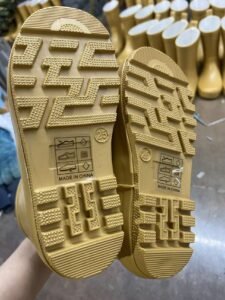
Outsole
Fit
Flexibility
Weight
Protective features
Target price range
The factory should be able to identify existing products or constructions that provide a suitable starting point.
Existing Products Can Reduce Unnecessary Development
If an existing rubber boot already meets the main application requirements, buyers may not need to develop an entirely new product.
Instead, the project can focus on commercially important customization such as colors, branding, packaging or other feasible product details.
For an initial order, this can be a practical way to evaluate the product and market before considering more extensive development.
Rubber boots should not be evaluated only by their external appearance.
The materials, components and construction can influence how the finished footwear performs, feels and fits its intended market.
Rubber Compound
Rubber formulations can vary according to the product design and required characteristics.
Buyers should discuss the intended application rather than assuming that all products described as “rubber boots” use identical material specifications.
The appropriate material choice can depend on factors such as:
Intended use
Flexibility requirements
Product weight
Working environment
Target market
Product positioning
Boot Components
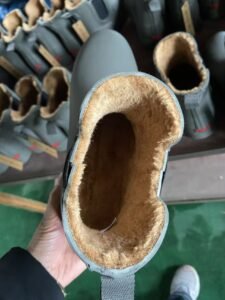
Depending on the design, a rubber boot may involve several components or construction elements, such as:
Upper or shaft
Outsole
Lining
Insole
Reinforcement
Branding elements
Protective components, where applicable
The exact construction varies by product.
Evaluate the Complete Product
A buyer should therefore evaluate the finished boot rather than making purchasing decisions based only on the material name.
Two rubber boots can differ substantially in construction, weight, flexibility, outsole design, fit and intended application.
When comparing manufacturers, ask what construction they recommend for the actual use case and why that construction is suitable.
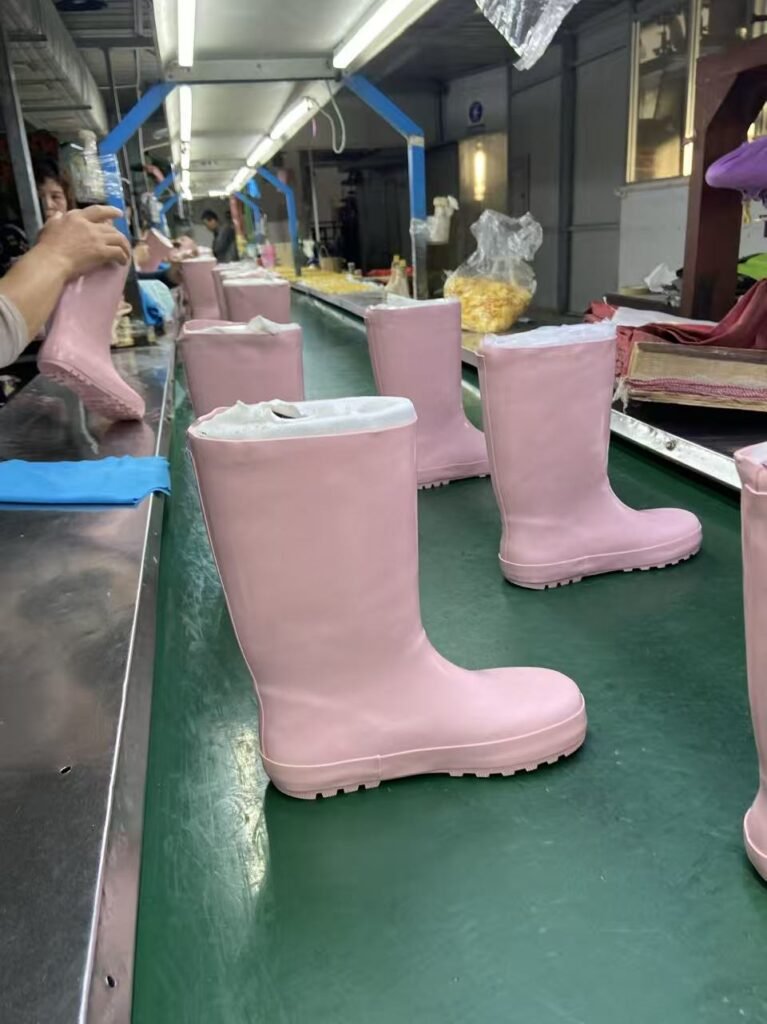
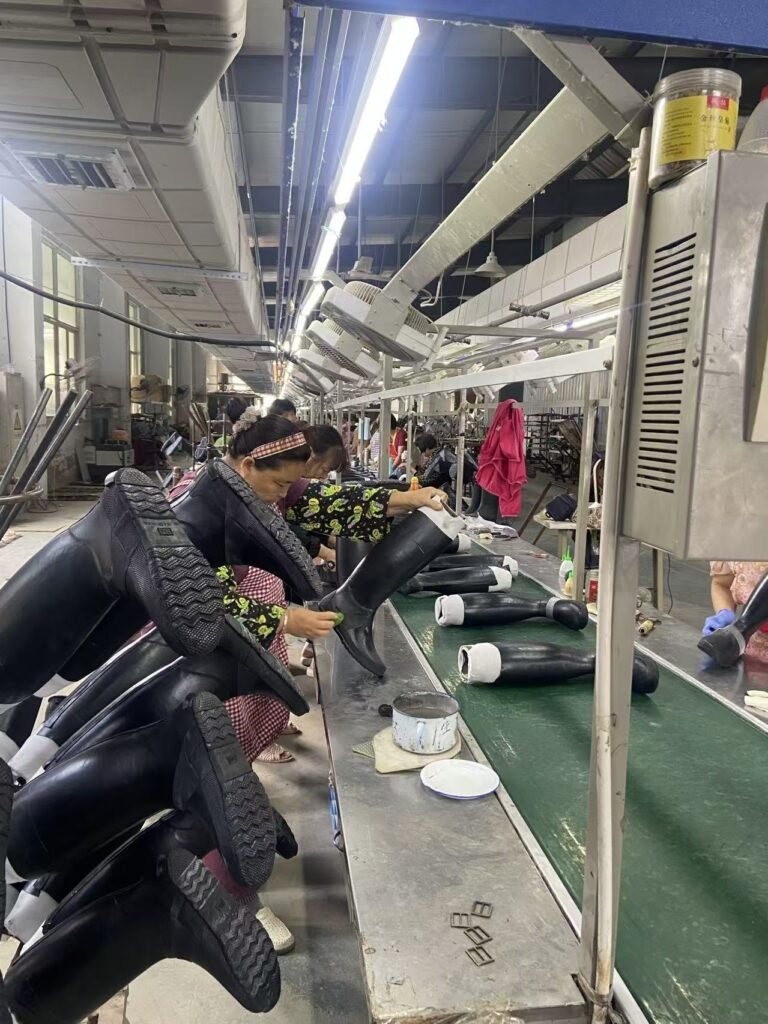
A manufacturer’s ability to show finished rubber boots is useful, but B2B buyers should also understand how the products move through production.
The exact manufacturing process depends on the rubber boot construction and factory equipment, so buyers should evaluate the process used for the specific product they intend to order.
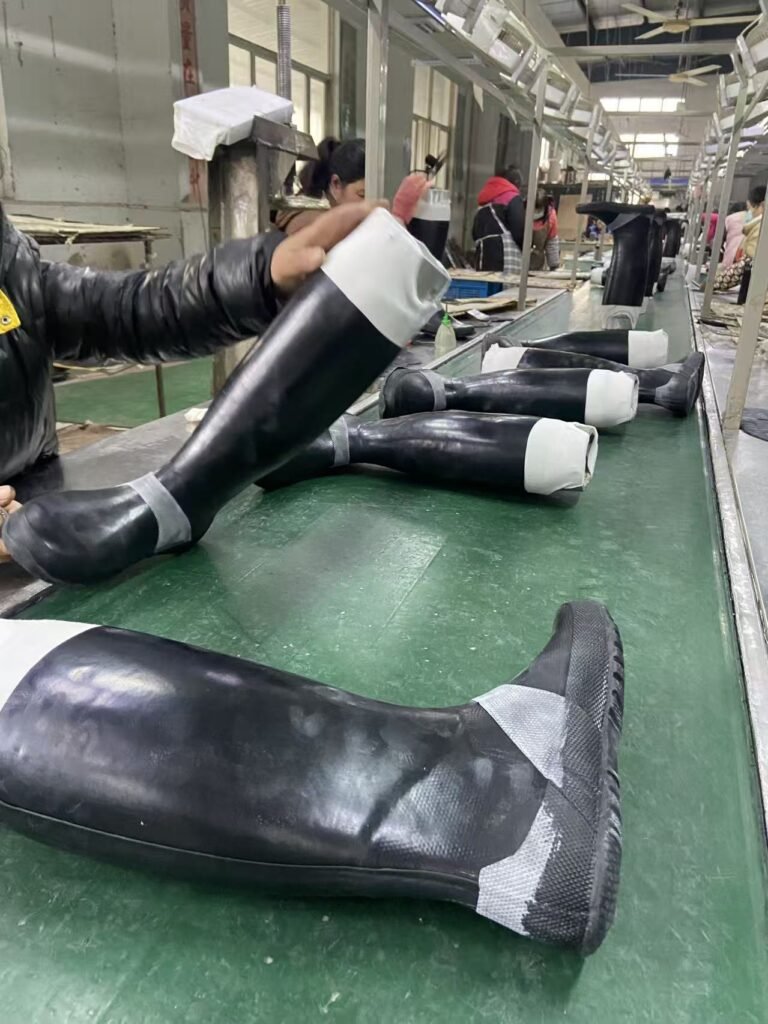
Ask About the Main Production Stages
Depending on the product, production may involve stages such as:
Material preparation
Component preparation
Forming
Assembly
Curing or vulcanization where applicable
Finishing
Inspection
Packing
The purpose of reviewing these stages is not to become a footwear engineer.
It is to understand whether the manufacturer has appropriate control over the processes that affect your product.
Look Beyond Production Capacity
Large production capacity can be useful for high-volume orders, but capacity alone does not determine whether a factory is suitable.
Buyers should also consider:
Product specialization
Production consistency
Sample-to-bulk control
Quality inspection
Customization capability
Order planning
Communication
A factory capable of producing a very large number of pairs is not automatically the best choice for a specialized OEM project.
Ask How Specifications Are Controlled
One of the most important questions is how an approved product specification is transferred into bulk production.
Buyers should understand how the factory controls details such as:
Materials
Colors
Sizes
Logo
Outsole
Components
Packaging
This becomes especially important when the order contains multiple sizes, colors or customized elements.
Before developing a custom rubber boot, buyers should determine whether an existing construction can meet the main product requirements.
Not every OEM project requires a completely new design or new tooling.
When Existing Products May Be Suitable
An existing rubber boot can be a practical starting point when its basic construction already matches the intended application.
Depending on the product, buyers may then customize elements such as:
Colors
Logo
Labels
Packaging
Available outsole options
Other feasible product details
This approach can be particularly useful for brands or distributors testing a new product category.
When New Development May Be Necessary
More extensive development may be required when the buyer needs:
A proprietary boot shape
A unique outsole
Different dimensions
Significant structural changes
Molded proprietary details
Application-specific construction not available in existing products
In these cases, the manufacturer should evaluate what new molds, tooling or development work is required.
Ask About Tooling Before Approving the Project
Before investing in new development, buyers should confirm:
Which components require tooling?
Which sizes require separate molds?
Which existing components can still be used?
How will the sample be developed?
How will the tooling be used for repeat orders?
What product volume is expected?
A proprietary mold can create meaningful differentiation, but it should solve a genuine product or market requirement.
For many first orders, an existing construction with carefully selected customization may provide a more practical starting point.
Buyers considering different levels of product development can also review our guide to custom rain boots for OEM orders.
For brands, importers and distributors, manufacturing capability is only part of the supplier evaluation.
The factory must also be able to support the level of OEM or private-label customization required for the project.
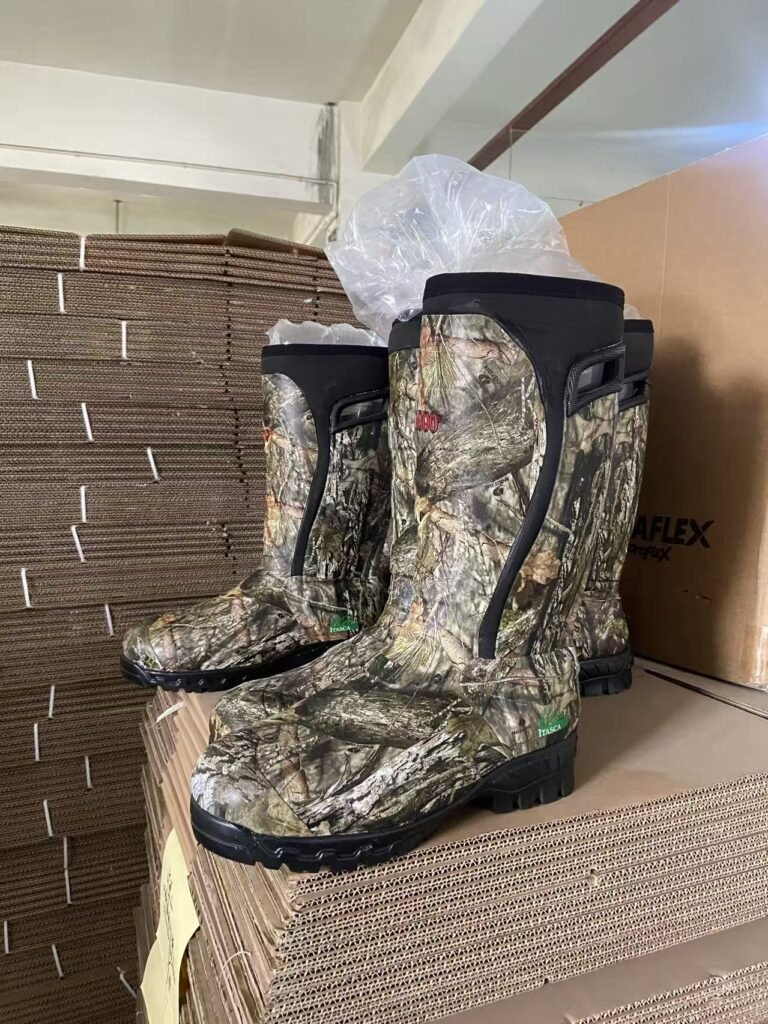
Common OEM Requirements
Depending on the rubber boot construction, buyers may need to discuss:
Custom colors
Logo and branding
Labels
Hangtags
Size markings
Outsole options
Packaging
Carton markings
Other product-specific details
The available options should be confirmed for the actual boot rather than assumed to apply to every product.
Private Label vs Product Development
A private-label program may use an existing rubber boot and focus on branding and packaging.
A more advanced OEM program may involve changes to the product itself.
Buyers should therefore explain whether the goal is primarily:
Adding a brand to an existing product
Creating a differentiated version of an existing boot
Developing a proprietary product
This helps the manufacturer recommend a more appropriate development route.
Confirm Customization Before Quotation
Customization can affect the product specification, production arrangement, MOQ, tooling and packaging.
Before comparing quotations, buyers should make sure suppliers are quoting against similar requirements.
A low quotation for a standard product and a higher quotation for a more customized construction are not directly comparable.
Clear specifications make supplier comparisons more meaningful.
A physical sample is one of the most useful reference points in an OEM rubber boot project.
It allows the buyer to evaluate the actual product before committing to bulk production.
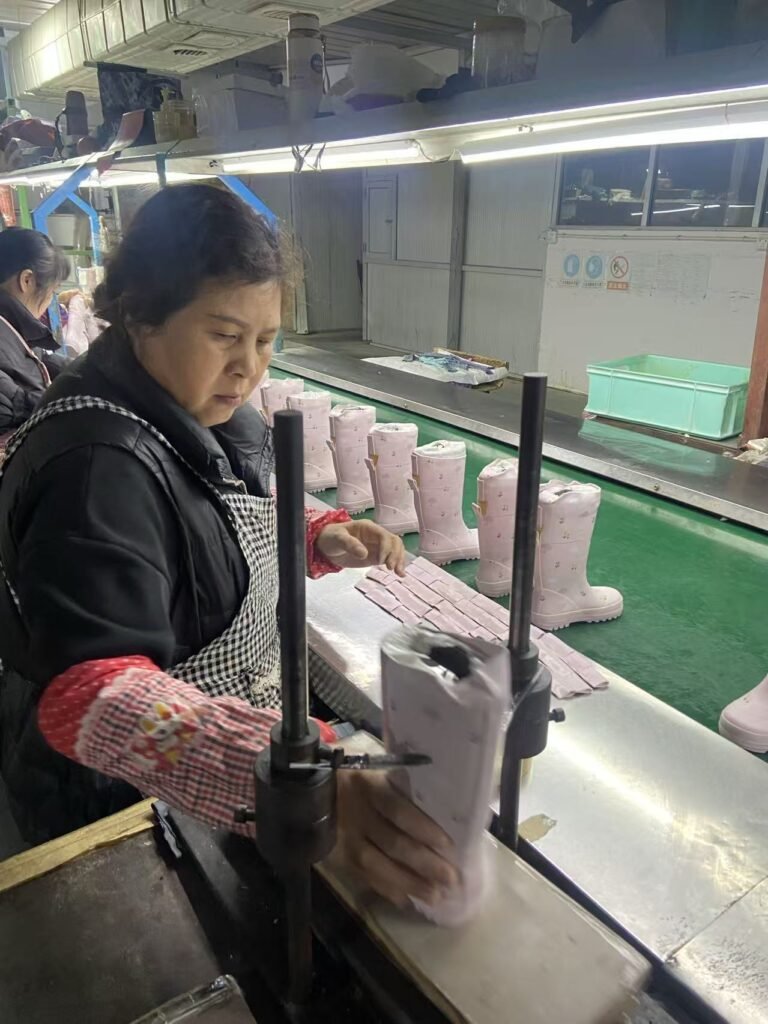
What Should Buyers Review?
Depending on the project, sample evaluation may include:
Overall appearance
Construction
Material feel
Size and fit
Boot height
Weight
Flexibility
Color
Logo
Outsole
Lining
Packaging
Other agreed product details
The evaluation should focus on the requirements that matter for the intended market and application.
Do Not Rely Only on Photos
Photographs and digital artwork are useful for communication, but they cannot always show fit, flexibility, weight, physical color or construction accurately.
Where these details are important, the physical sample should be reviewed.
Document Required Changes
If the sample requires revision, buyers should provide clear feedback.
Instead of general comments such as “make it better” or “change the color,” specify:
What needs to change
Where the change applies
The required reference
Whether a new sample is needed
Connect Sample Approval to Bulk Production
Once the product is approved, the final specification should record the agreed details.
The approved sample and specification can then provide a reference for bulk production and quality inspection.
This reduces the risk of relying on scattered emails, messages or artwork files when the order moves into manufacturing.
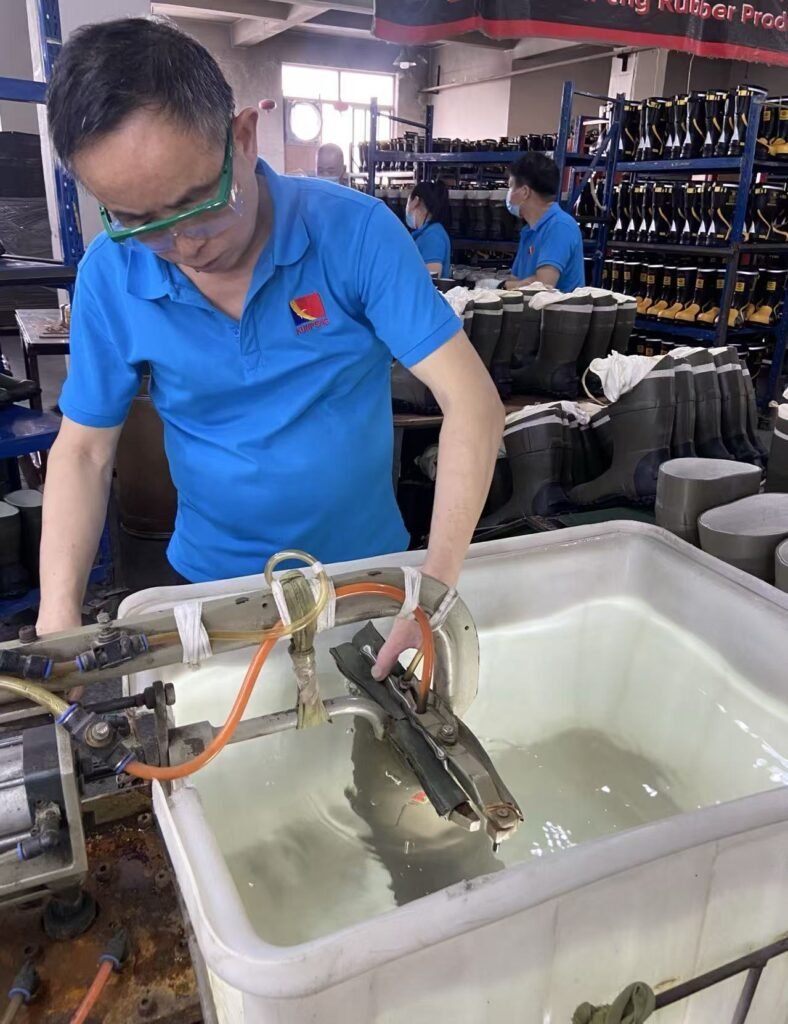
Quality control should be evaluated as part of the manufacturing process rather than treated only as a final inspection before shipment.
The appropriate inspection and testing requirements depend on the product, intended application and target market.
In-Process Quality Control
During production, relevant checks may include:
Product appearance
Construction consistency
Color
Size
Logo placement
Outsole
Components
Finishing
Identifying issues during production can help prevent the same problem from continuing through a larger quantity of finished goods.
Final Inspection
Before packing or shipment, the finished order should be checked against the approved product requirements.
Depending on the project, this can include:
Product model
Size assortment
Color
Branding
Pair matching
Packaging
Order quantity
Other agreed specifications
Testing Should Match the Product Claims
Not every rubber boot requires the same tests.
Testing requirements can depend on:
Intended use
Destination market
Product category
Protective features
Performance claims
Customer specifications
If the product will be marketed with specific occupational or safety claims, the applicable requirements should be identified before bulk production.
A component alone does not automatically establish that the finished boot meets a particular standard.
Ask for Relevant Documentation
Where testing or compliance is required, buyers should confirm what documentation applies to the specific finished product.
Avoid relying on unrelated certificates or general statements that do not clearly correspond to the product being ordered.
Buyers sourcing occupational footwear can also review our guide to safety standards for OEM rain boot manufacturing.
A suitable rubber boots manufacturer must be able to produce the product, but B2B sourcing also depends on how clearly the project is communicated and managed.
Poor communication can create problems even when the factory has strong production capability.
Product Specifications Should Be Clear
Important requirements should be documented rather than left to informal assumptions.
These can include:
Product model
Material or construction
Sizes
Colors
Logo
Outsole
Packaging
Quantity
Testing requirements
Other approved details
When specifications change, both buyer and manufacturer should understand which version is current.
Evaluate Communication During Sampling
The sample stage provides an opportunity to evaluate the supplier’s communication.
Consider whether the manufacturer:
Understands the requested changes
Explains technical limitations
Confirms specifications clearly
Identifies missing information
Provides useful feedback when a request is impractical
Good communication does not mean agreeing to every request.
A manufacturer that identifies potential problems before production can be more useful than one that accepts specifications without evaluating feasibility.
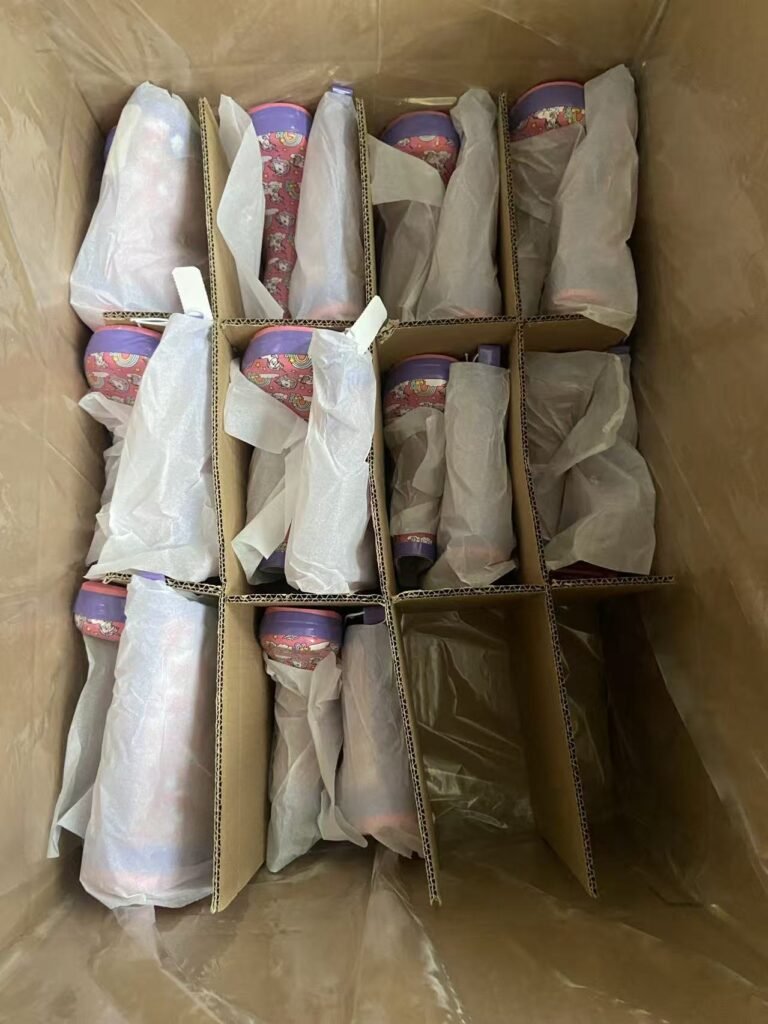
Consider Export and Packing Requirements
For international B2B orders, buyers should also confirm the manufacturer’s ability to handle the agreed:
Product packing
Export cartons
Shipping marks
Commercial documentation
Shipment preparation
The exact responsibilities depend on the agreed commercial and shipping terms.
Evaluate the Complete Sourcing Risk
The lowest unit price does not necessarily represent the lowest overall sourcing risk.
Product consistency, specification control, communication, packaging and delivery execution can all affect the final cost of an international order.
For B2B buyers, these factors should be considered together when comparing potential manufacturing partners.