Custom PVC rain boots allow brands, importers and distributors to adapt an existing boot or develop a more distinctive product for their target market.
But “custom rain boots” can mean very different things. One buyer may only need a custom color and logo, while another may require a proprietary outsole, new mold, special packaging or a complete private-label program. These options involve different development processes, costs, MOQs and lead times.
For B2B buyers, the key is to decide which features actually need to be customized before requesting samples or quotations.
This guide explains the main customization options available for PVC rain boots, including colors, logos, boot construction, outsoles, molds, packaging and private labeling, as well as what buyers should prepare before starting an OEM project.
1. Start With the Level of Customization You Need
Before discussing individual colors, logos or molds, buyers should first determine how much of the PVC boot actually needs to be customized.
In general, an OEM project can range from simple branding changes to the development of a completely new product.
Level 1: Branding an Existing Boot
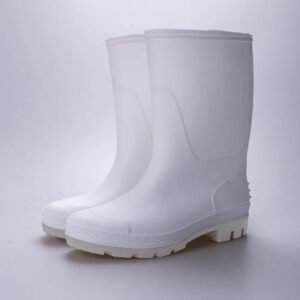
The simplest approach is to select an existing PVC boot construction and customize its branding.
Depending on the product, this may include:
Custom logo
Brand label
Hangtag
Packaging
Shipping marks
This approach is often suitable for buyers who want to enter the market without developing a completely new boot.
Because the basic construction and molds already exist, product development can also be more straightforward.
Level 2: Color and Product Detail Customization
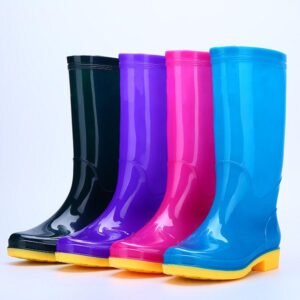
The next level combines an existing boot construction with more visible product changes.
These may include:
Custom boot colors
Different sole colors
Logo position or method
Lining details
Boot height options
Packaging design
This gives brands more control over the appearance of the product while still taking advantage of an established boot construction.
Level 3: Structural Customization
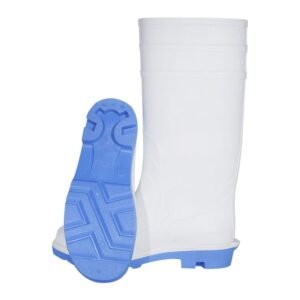
More advanced projects may require changes to the physical construction of the boot.
Examples include:
These changes normally require more product development than color or branding customization.
Choose Customization Based on the Market
More customization is not automatically better.
For a new product or trial order, using an existing construction with selected branding and color changes may reduce development complexity.
For an established brand with larger projected volumes, investing in proprietary tooling or a more distinctive product construction may make commercial sense.
The appropriate level of customization should therefore reflect the target market, expected volume, budget and long-term product strategy.
2. Custom Colors for PVC Rain Boots
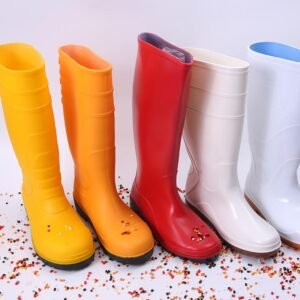
Color customization is one of the most common ways to differentiate PVC rain boots without changing the basic product construction.
Depending on the boot design, buyers may be able to specify colors for the boot body, outsole or other visible components.
Use a Clear Color Reference
For custom color projects, provide a recognized color reference such as a Pantone code whenever possible.
A description such as “dark green” or “bright yellow” can be interpreted differently by different people. A defined color reference gives the buyer and manufacturer a clearer target during sampling.
Buyers should also remember that the appearance of a finished PVC product may not be identical to a color displayed on a computer screen or printed on paper.
For important brand colors, approve a physical sample before bulk production.
Consider the Number of Colors in the Order
An order containing one custom color is different from an order divided across several colors.
Each additional color can require separate material preparation and production arrangements. For smaller orders, this may affect the practical minimum quantity per color.Buyers planning several colors should also consider how color separation can affect PVC rain boots MOQ and minimum quantities per production run.
Brands testing a new product can therefore consider launching with a smaller number of core colors before expanding the range in repeat orders.
Confirm Color Before Bulk Production
The approved sample should clearly establish the expected color for production.
If different parts of the boot use different colors, record each requirement in the final product specification.
This is particularly important when the boot body, outsole, logo or accessories use separate color references.
3. Custom Logos and Branding Options
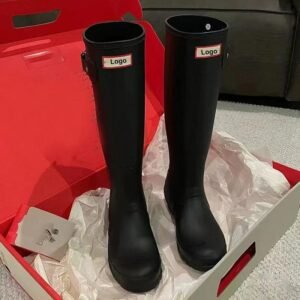
A logo is often the first customization requested for a private-label rain boot, but the appropriate branding method depends on the boot construction, logo design, required appearance and production quantity.
Before choosing a method, buyers should consider where the branding will appear and how prominent it needs to be.
Printed Logos
Printing can be suitable for logos, text or graphics that need to appear on the surface of the boot.
The feasibility of a custom printed rain boot depends on factors such as the artwork, number of colors, print area and PVC surface.
Provide vector artwork whenever possible and confirm the final logo size and position during sampling.
Molded or Embossed Logos
Some PVC boot constructions can incorporate branding directly into the molded product.
This can create a more integrated appearance than a surface-applied logo.
However, molded branding may require changes to tooling or dedicated logo components depending on the existing mold design.
Buyers should confirm whether the selected boot already supports this option before assuming that an embossed logo can simply be added.
Labels and Other Branding Elements
Brand identity can also be applied through components such as:
For private-label programs, these elements should be planned together rather than treated as separate decisions at the end of production.
Provide Final Artwork Early
Logo artwork should be supplied before the customized sample is prepared.
Confirm:
The approved sample and artwork should then become part of the final production reference.
4. Custom Outsoles and Boot Construction
Beyond colors and logos, buyers may also want to customize the functional or structural features of PVC rain boots.
These changes can have a greater impact on product development because they may affect molds, tooling, materials, sampling and production requirements.
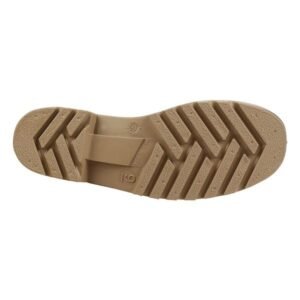
Outsole Design
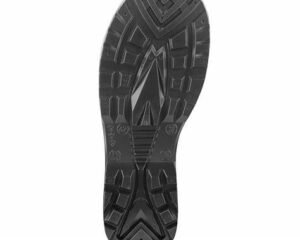
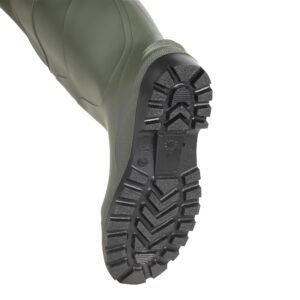
The outsole plays an important role in the appearance and intended application of a PVC boot.
Depending on the project, buyers may consider:
Existing outsole patterns
Custom outsole colors
Different tread designs
Proprietary outsole branding
Application-specific outsole requirements
Using an existing outsole is generally the simplest option for a first order.
A proprietary tread pattern or completely new outsole design may require new tooling and additional development before production.
Boot Height and Shape
PVC rain boots can be developed in different heights and constructions depending on their intended use.
For example, a work boot used in wet industrial environments may have different requirements from a boot intended for agriculture, fishing or general waterproof protection.
Before changing the boot height or shape, buyers should confirm whether an existing mold already meets the required dimensions.
Functional Features
Some projects may also require functional features such as:
Slip-resistant outsole designs
Reinforced areas
Protective toe options
Different lining constructions
Application-specific tread patterns
Other performance-related features
These requirements should be discussed at the beginning of the project rather than added after the sample has already been developed.
If a product will be marketed for occupational or safety use, buyers should also identify the applicable performance and compliance requirements for the target market before finalizing the construction.
Start With the Intended Application
A useful way to define the product is to begin with where the boot will actually be used.
Tell the manufacturer whether the product is intended for construction, agriculture, fishing, food processing, general work or another environment.
This gives the factory more context when recommending an existing construction or evaluating whether additional development is necessary.
5. When Do You Need a New Mold?
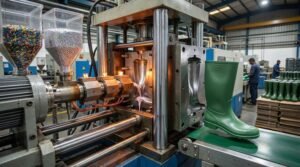
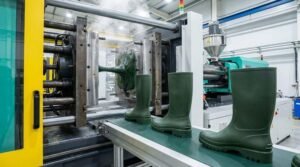
Not every custom PVC rain boot requires a new mold.
In many OEM projects, buyers can use an existing factory construction and customize selected elements such as color, logo and packaging.
New tooling becomes more relevant when the required product cannot be achieved with the manufacturer’s existing molds.
An Existing Mold May Be Suitable When
An existing construction may be appropriate if the buyer mainly needs:
This can be a practical approach for trial orders or buyers entering a new market.
A New Mold May Be Required When
New tooling may need to be evaluated when the project requires:
A proprietary boot shape
A substantially different shaft design
A new outsole pattern
Unique dimensions
Structural changes that cannot be made with existing tooling
Proprietary molded design elements
Whether a new mold is necessary should be confirmed after the manufacturer reviews the product drawing, reference sample or detailed specification.
New Tooling Changes the Development Process
A project involving new tooling is different from adding a logo to an existing boot.
Buyers should discuss:
These points should be clarified before tooling begins.
Do Not Develop a New Mold Unless It Adds Value
A completely proprietary boot can help differentiate a product, but new tooling should solve a real commercial or functional requirement.
If an existing construction already meets the target market’s needs, customizing the color, branding and packaging may be a more efficient starting point.
For buyers comparing factories and development capabilities, our B2B guide to choosing a PVC rain boots manufacturer in China explains additional factors to evaluate before selecting a production partner.
6. Private Label Packaging Options
Private labeling extends beyond the logo on the boot itself.
For brands, importers and distributors, packaging and product identification can also be part of the OEM program.
Depending on the project, private-label options may include:
Printed retail boxes
Polybags
Hangtags
Product labels
Size labels
Barcode labels
Product inserts
Export carton markings
Packaging Should Match the Sales Channel
The appropriate packaging depends on how the boots will be distributed.
A product supplied to an industrial distributor may have different packaging requirements from footwear intended for retail shelves or e-commerce fulfillment.
Buyers should therefore tell the manufacturer how the product will be sold rather than simply asking for “custom packaging.”
Confirm Packaging MOQ Separately
Custom packaging components may have minimum order quantities that are different from the MOQ for the boots themselves.
For example, a printed box supplier may have its own production minimum even if the required quantity of boots is relatively small.
For trial orders, buyers can ask whether standard packaging with customized labels or markings is a practical alternative.
For a more detailed explanation of how colors, packaging and product configurations affect order quantities, see our guide to PVC rain boots MOQ for B2B orders.
7. How the Custom PVC Rain Boot Process Works
A clear development process helps buyers and manufacturers confirm product requirements before bulk production begins.
The exact steps vary depending on the level of customization, but a typical OEM PVC rain boot project may follow the process below.
Step 1: Send Your Product Requirements
Provide the manufacturer with the basic project information, including:
If you do not have a finished product design, explain the intended application and ask whether an existing factory model can be used as a starting point.
Step 2: Select an Existing Product or Evaluate New Development
The manufacturer reviews the requirements and determines whether an existing construction is suitable.
If the project can use an existing mold, development may focus on colors, branding and packaging.
If significant structural changes are required, tooling and development requirements should be evaluated before proceeding.
Step 3: Confirm Specifications and Quotation
Before sampling, both sides should confirm the main commercial and technical requirements.
These may include:
This reduces the risk of developing a sample based on incomplete information.
Step 4: Develop and Approve the Sample
A customized sample allows the buyer to evaluate the product before bulk production.
Depending on the project, the buyer may check:
Any changes should be documented before the final sample is approved.
Step 5: Confirm the Bulk Production Specification
The approved sample should be supported by a clear production specification.
Final details such as colors, size breakdown, logo position, packaging and carton markings should be confirmed before production starts.
Step 6: Bulk Production and Quality Control
Once the order is confirmed, the factory proceeds with material preparation and production according to the approved specification.
Quality checks should focus on the agreed product requirements rather than relying only on visual inspection at the end of production.
Step 7: Packing and Shipment
After production and final inspection, the boots are packed according to the confirmed packaging requirements and prepared for shipment.
Export documents and shipping arrangements should be coordinated according to the agreed trade terms and destination.
8. What to Send for a Custom PVC Rain Boot Quote
A detailed inquiry helps a manufacturer evaluate whether your customization requirements can be achieved with an existing product or require additional development.
When requesting a quotation, provide as much of the following information as possible.
1. Product Reference
Send a photo, drawing, existing sample or link that shows the type of PVC rain boot you are looking for.
If you are open to factory recommendations, explain the intended application instead.
2. Estimated Order Quantity
Provide the expected quantity for the first order and, if available, the estimated volume for repeat orders.
3. Size Range
Specify the required sizes and approximate size breakdown if known.
4. Color Requirements
Provide the number of colors and Pantone references when specific color matching is required.
5. Logo Artwork
Send vector artwork when available and indicate the preferred logo position, size and color.
6. Outsole and Construction Requirements
Explain whether an existing outsole is acceptable or whether the project requires a proprietary tread pattern, boot shape or other structural feature.
7. Packaging
Specify any requirements for boxes, bags, labels, hangtags, barcodes, inserts or export cartons.
8. Application and Target Market
Tell the manufacturer where the boots will be used and where they will be sold.
This is particularly important for work, industrial or safety-related products.
9. Target Schedule
If the project has a required launch or delivery date, provide it early so the manufacturer can evaluate sampling and production timing.
A complete RFQ does not need to contain a finished technical specification. However, the more clearly the buyer defines the project, the easier it is for the manufacturer to recommend a practical OEM solution.
9. Custom PVC Rain Boots Checklist
Start Your Custom PVC Rain Boot Project
Custom PVC rain boots can range from a simple logo and color change to a fully developed private-label product with proprietary molds, outsoles and packaging.
The right approach depends on your target market, order quantity and how much product differentiation the project actually requires. For many first orders, starting with an existing boot construction and customizing the most important branding elements can provide a practical path to market.
Jolly Boots supports OEM and bulk PVC rain boot projects for brands, importers and distributors. Explore our PVC rain boots manufacturing and OEM options, or send us your product reference, quantity, colors, size range, logo and packaging requirements for project evaluation.